Sliding Doors: Repair Options and Considerations
Sliding doors rarely fail all at once. A roller stiffens, grit builds up in the track, a weather seal cracks, and before long the panel drags, the lock no longer lines up, and wind finds a gap that was never there before. For villa owners, home builders, architects and renovation contractors, the hard part is not identifying the fault — it is deciding whether to repair, rebuild or replace, and then sourcing components that match the original footprint, finish and security rating. Add coastal corrosion, long-term maintenance costs, non-standard opening sizes and the disruption of a full reinstallation, and a simple repair quickly becomes a planning exercise.
This guide covers what actually determines whether a sliding door can be repaired economically, how material and construction choices affect that decision, and which details are worth confirming before you commit to a specification.
Core Materials and What They Mean for Repairability
Material selection dictates both service life and how straightforward a repair will be. In exterior applications, the dominant choice is extruded aluminium alloy, typically 6063-T5, because it resists rust without plating, holds tight tolerances for sliding hardware, and can be re-anodised or re-powder-coated when a finish is damaged rather than replaced wholesale. Thermally broken profiles — with a polyamide or polyurethane barrier between inner and outer sections — are essential where condensation and heat transfer matter.
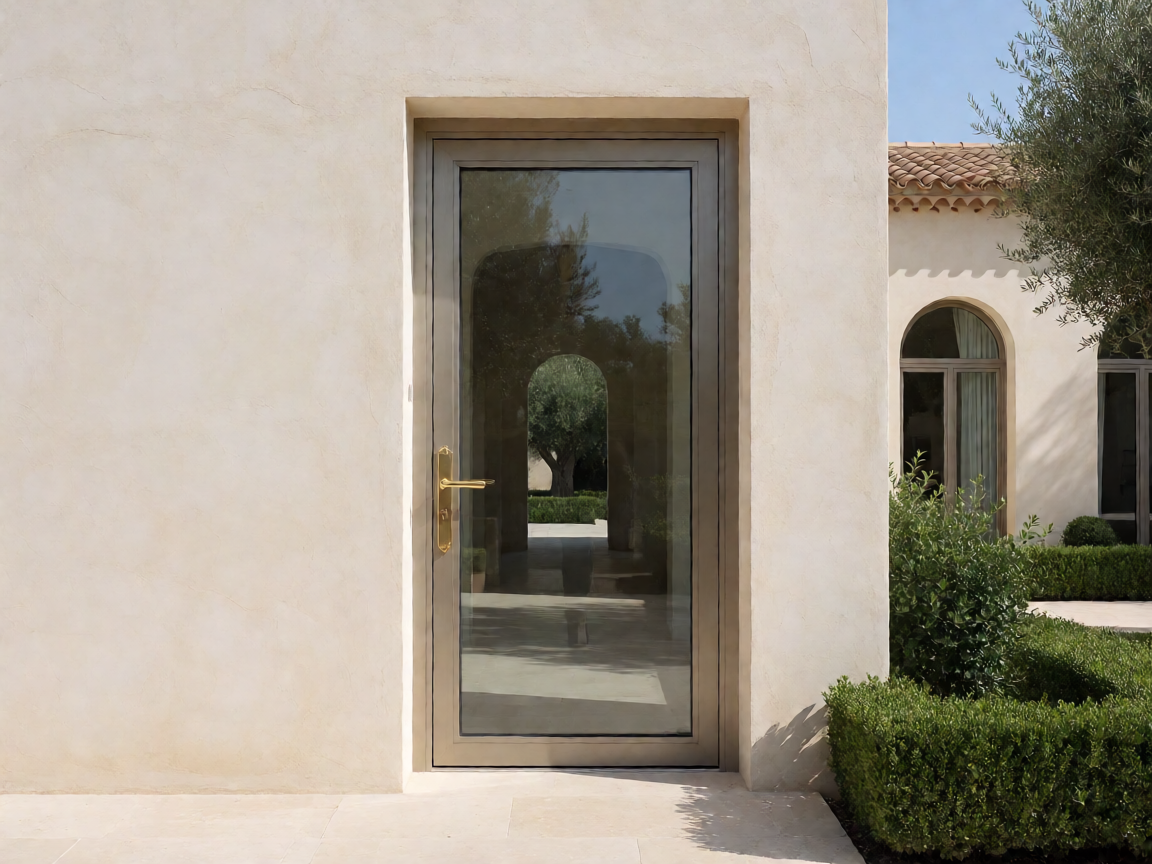
Cast aluminium is used mainly for decorative panels and entry units, including the cast aluminum villa door formats that pair a heavy ornamental face with a sliding or swing frame. Cast sections are repairable, but a damaged casting usually has to be recast or replaced as a unit, so they are best specified where impact risk is low.
Steel remains common in older installations. It is strong and weldable, which makes structural repairs possible, but rust at the base track and weld seams is the usual cause of failure. Timber offers excellent thermal performance and easy on-site adjustment, yet it moves with humidity and demands regular refinishing. uPVC is inexpensive and low-maintenance, though frames become brittle with UV exposure and rarely accept upgraded hardware.
Structure and Specifications That Determine Repairability
Two doors of identical appearance can behave very differently after ten years. The specification below is what separates a serviceable system from one that must be replaced.
| Component | Typical Range | Repair Implication |
|---|---|---|
| Frame profile wall thickness | 1.4–2.0 mm (residential), 2.0–2.5 mm (villa exterior) | Thinner walls distort under load and cannot be re-machined for new hardware |
| Panel plate thickness | 0.8–1.2 mm sheet; 3–6 mm cast or decorative faces | Thicker plate accepts re-drilling and reinforcement plates |
| Core filling | Aluminium honeycomb, PU foam, mineral wool | Aluminum honeycomb filling resists moisture ingress and keeps panels flat, so a repaired leaf still seals correctly |
| Glazing | 6–12 mm toughened, laminated, or double-glazed units | Standard rebate depths allow a single pane to be swapped without replacing the sash |
| Lock system | Multi-point mechanical, or electronic with fingerprint and app control | Modular lock bodies and standard mortise cut-outs make upgrades practical |
Hardware is where most repairs begin: rollers, bottom guides, track inserts, brush seals and lock keeps are the parts that wear. On a well-built system these are replaceable in an afternoon. On a light-gauge frame with integrated hardware, the same fault often means a new unit.
Key Advantages for Villa Exterior Applications
- Corrosion resistance. Aluminium and stainless hardware tolerate salt air and heavy rain far better than untreated steel; powder-coated finishes to AAMA 2604/2605 standards hold their appearance for years.
- Low maintenance. Track cleaning, roller lubrication and seal inspection twice a year is normally the entire schedule.
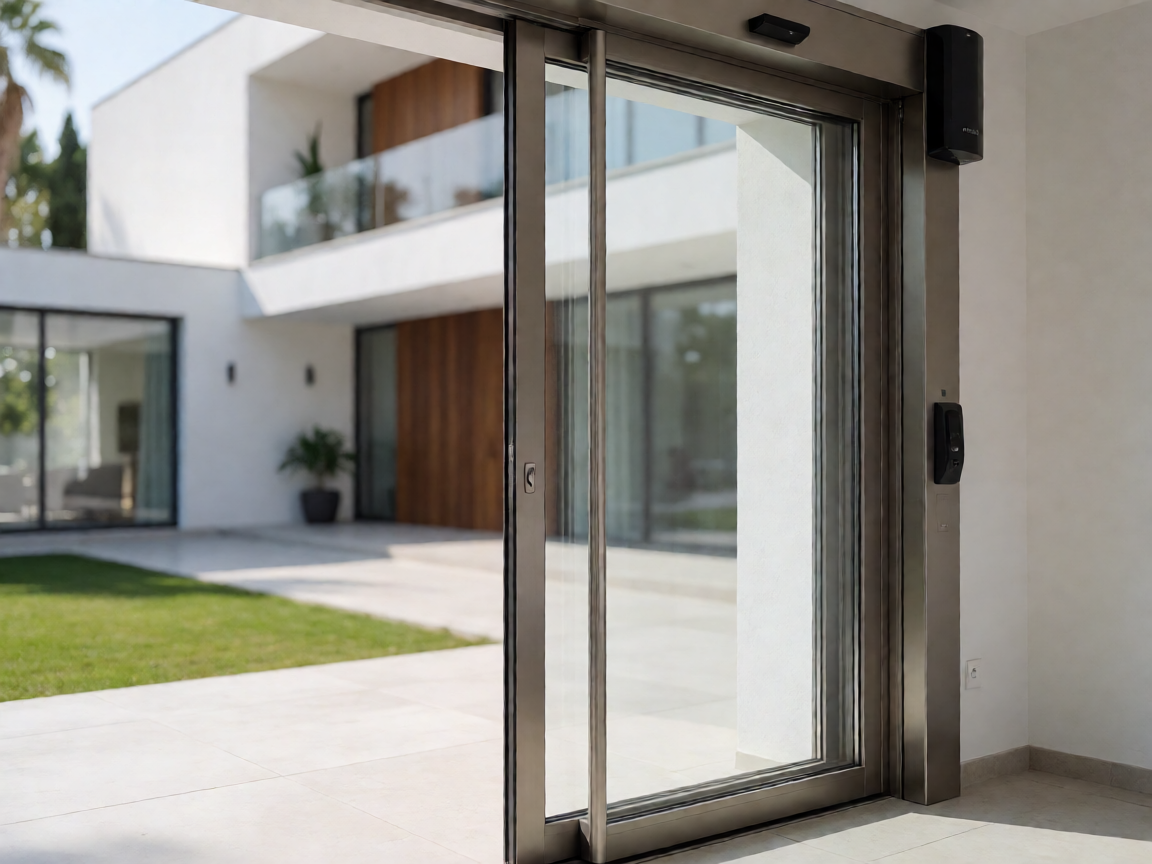
- Security. Multi-point locking, anti-lift blocks and laminated glass bring exterior sliders close to the performance of a solid entry door — important where a sliding leaf is the primary access to a terrace or pool deck.
- Large clear openings. Sliding panels move the full leaf aside without the swing clearance a hinged door needs, which suits wide villa facades and covered outdoor rooms.
- Design continuity. Profiles, finishes and glass can be matched to windows, a custom aluminum courtyard gate or a glass spliced exterior door so the whole elevation reads as one system.
Custom Options When a Repair Turns Into an Upgrade
If the existing frame is sound but the door no longer meets expectations, partial replacement is often the most cost-effective route. Available customisation includes:
- Finish and colour: powder coat in RAL or custom tones, anodised, wood-grain sublimation, or two-tone interiors.
- Opening direction: left or right slide, two- or three-track configurations, bi-parting, and pocket or lift-slide mechanisms.
- Access control: a smart fingerprint lock with keypad, card and app options, or multi-point mechanical hardware where power is unavailable.
- LED decoration: integrated strip lighting in the frame or threshold for night-time visibility and architectural accent.
- Transom lintel: a fixed glazed panel above the sliding leaf to raise the head height and increase daylight without changing the opening.
Where a full replacement is planned, matching the structural opening to standard module sizes will reduce cost and lead time considerably.
Repair or Replace: Selection and Buying Tips
- Diagnose before ordering. Confirm whether the fault is the roller, the track, the frame geometry or the seal. Distorted frames cannot be fixed with new hardware.
- Check the frame wall thickness. Below roughly 1.4 mm, re-machining for upgraded hardware usually fails.
- Verify hardware availability. Standard roller and lock families stay in production for decades; proprietary systems may not.
- Match the sightline. A replacement leaf should align with adjacent windows and the courtyard gate for a consistent facade.
- Confirm installation tolerances. Sliders need level, plumb tracks with correct drainage falls; poor installation causes most repeat failures, not the product.
- Ask about certification. Wind load, water tightness and security ratings should be documented, not assumed.
- Plan access. Large leaves may require crane or scaffold access — factor this into a repair-versus-replace comparison.
Conclusion
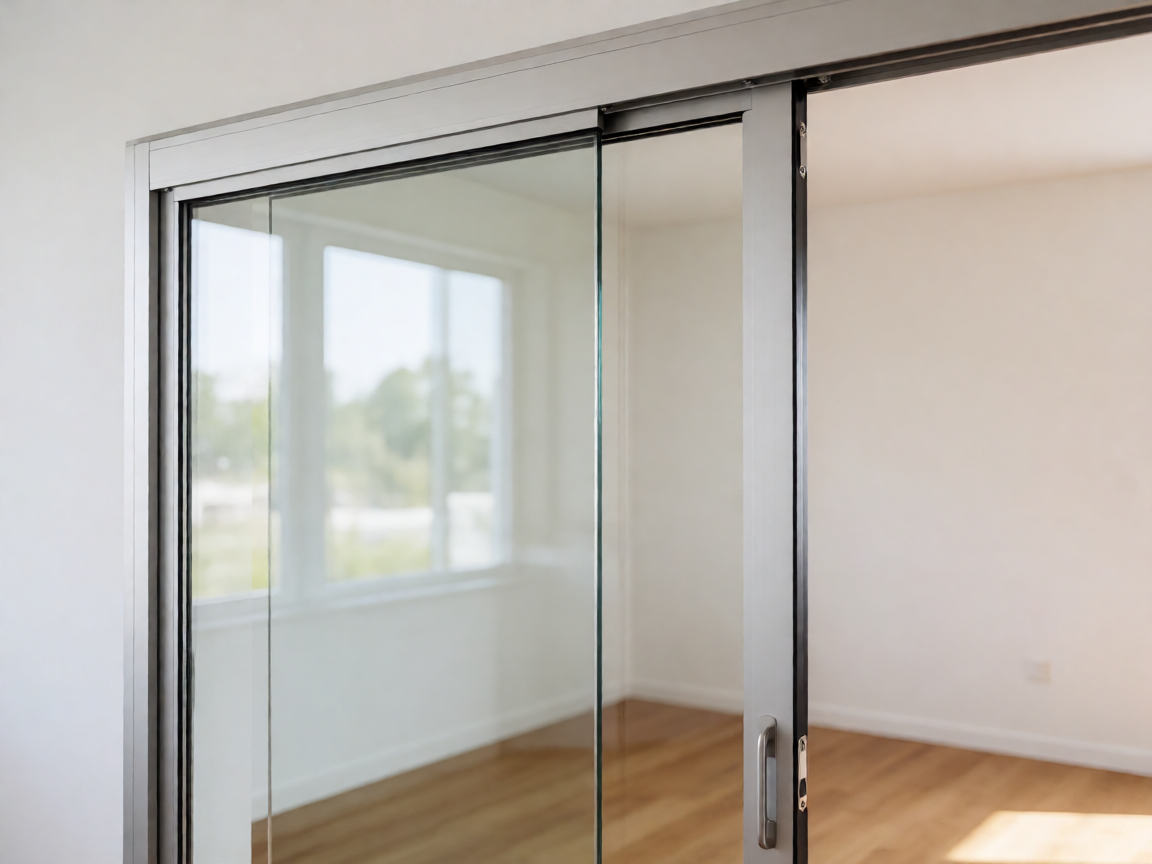
Most sliding door problems are hardware failures on otherwise serviceable frames, and a targeted repair remains the fastest, least disruptive option. The decision shifts toward replacement when the frame is thin-walled, corroded or distorted, when replacement parts are no longer made, or when the door must meet a higher security and thermal standard. Choosing a system with a robust profile, aluminium honeycomb filling, standard glazing rebates and modular locking gives you the option to repair rather than rebuild — which is the outcome that protects both the building and the budget over the life of the property.
Meta description: A practical guide to sliding door repairs for villas and exterior openings — materials, specifications, repair-versus-replace decisions and custom upgrade options.