Automatic Doors: Maintenance Checklist for Reliable Daily Operation
Automatic Doors: Maintenance Checklist for Reliable Daily Operation
Automatic doors on a villa property are expected to do three things without drama: close securely every night, survive a decade of rain, salt air, and sun, and never leave a homeowner standing in a driveway with a dead motor. The problems that surface most often are predictable — a gate that drifts out of alignment after two winters, hinges that start to grind because nobody lubricated them, a rust bloom along a cut edge, a sensor that stops detecting a child on a bicycle, or an operator installed on a gate that was never sized for automation. This guide explains how automatic doors and gates are built, what specifications actually matter, and what a realistic maintenance routine looks like for reliable daily operation.
Core Materials That Determine Service Life
The frame and panel material is the single biggest factor in how an automatic door performs over time. Aluminum alloy grades such as 6063-T5 are the standard choice for structural profiles because they resist corrosion without painting and hold their shape under repeated cycling. Cast aluminum villa door panels use a denser casting alloy, which allows deeper relief patterns and thicker sections than extruded profiles can offer, so the door reads as a solid architectural element rather than a lightweight panel.
Hardware should be matched to the climate. Coastal installations benefit from stainless steel hinges, rollers, and fasteners, while inland projects can use hot-dip galvanized or zinc-plated components. Powder coating and anodizing both protect the aluminum substrate; powder coating offers more color options, anodizing offers better abrasion resistance.
Product Structure and Specifications Explained
Specifications should be written into the purchase order, not left to the supplier's discretion. The table below shows ranges commonly used for villa exterior automatic doors and gates.
| Component | Typical specification | What it affects |
|---|---|---|
| Frame profile wall thickness | 1.8–2.5 mm | Rigidity, resistance to twisting under motor torque |
| Cast aluminum panel thickness | 6–10 mm | Impact and dent resistance at the base of the door |
| Aluminum honeycomb filling | 10–20 mm core | Panel stiffness at reduced weight, lighter load on the operator |
| Glass (glazed sections) | 5+5 mm laminated tempered | Safety, thermal performance, daylight transmission |
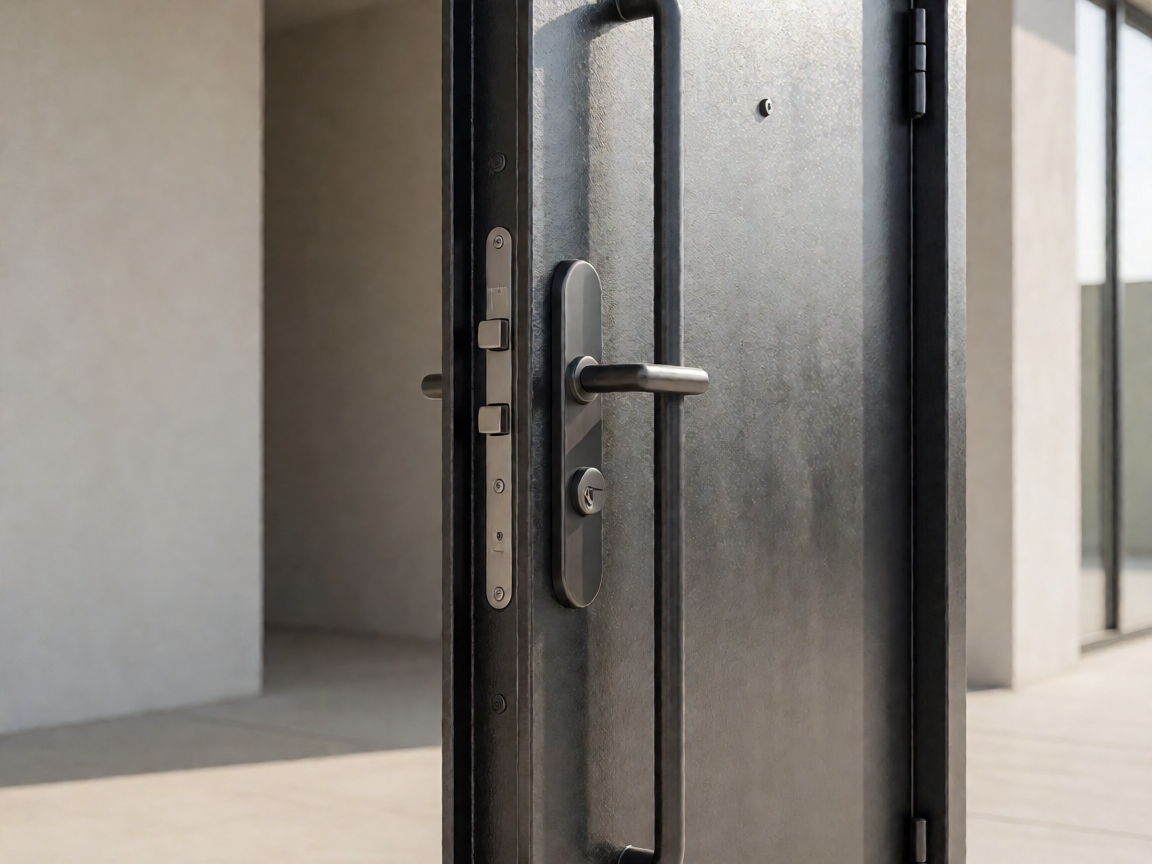
| Lock system | Mechanical multi-point plus electric strike | Security and integration with automation |
| Operator | 24 V DC, rated duty cycle | Smooth travel, battery backup compatibility |
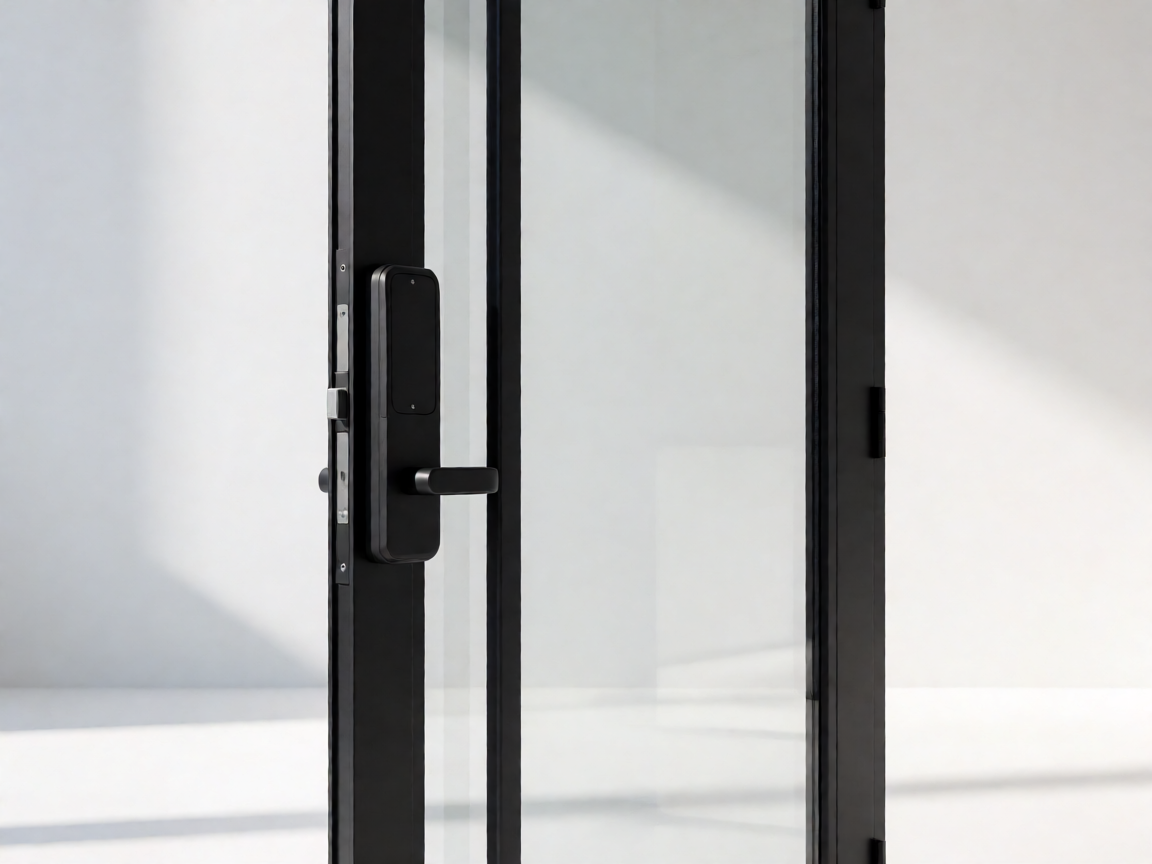
For glazed entrances, a glass spliced exterior door combines aluminum framing with large glazed panels, and the glass must be laminated rather than monolithic so it holds together if broken. The lock system deserves equal attention: a mechanical multi-point lock delivers the security, while an electric strike or motor lock allows the automated operator to release the leaf. Where keyless access is required, a smart fingerprint lock can be integrated into the same control circuit as the operator, provided the lock's power and signal requirements are confirmed before the frame is fabricated.
Key Advantages for Villa Exterior Applications
- Corrosion resistance: Aluminum does not rust the way steel does, which matters on coastal and high-humidity sites.
- Low maintenance: No repainting cycle; cleaning and lubrication cover most of the annual workload.
- Weight efficiency: Aluminum honeycomb filling keeps large leaves light enough for standard operators and reduces hinge wear.
- Security: Deep frame sections, multi-point locking, and a solid cast aluminum villa door leaf resist forced entry better than hollow profiles.
- Automation compatibility: Stable, square frames allow consistent alignment of photocells, limit switches, and locking points.
Available Custom Options
Villa projects rarely accept a catalogue size, so most automatic doors are built to the opening. Available options typically include:
- Finish and color: powder coating in any RAL tone, wood-grain sublimation, or anodized finishes.
- Opening direction: inward or outward swing, left or right hand, single or double leaf, and sliding configurations.
- Access control: smart fingerprint lock, keypad, RFID card reader, intercom, or app-based control.
- Lighting: LED strips recessed into the frame or handle, useful for path illumination and address visibility.
- Transom lintel: a fixed upper panel that brings a tall opening down to a standard door height and adds a horizontal architectural line.
A custom aluminum courtyard gate is usually specified as a complete assembly — frame, infill, automation, and access control — so that tolerances are handled by one supplier rather than coordinated across three.
Buying and Selection Tips
- Measure the clear opening, the reveal depth, and the finished floor level before ordering; automation tolerances are tight.
- Confirm the gate leaf weight and the operator's rated duty cycle. A residential operator on a commercial-frequency driveway will fail early.
- Ask for the profile wall thickness and panel thickness in writing.
- Check wind load requirements for exposed sites; large glazed leaves need reinforced stiles.
- Verify that safety sensors, battery backup, and manual release are included, not optional extras.
- Confirm the warranty covers the operator separately from the door structure.
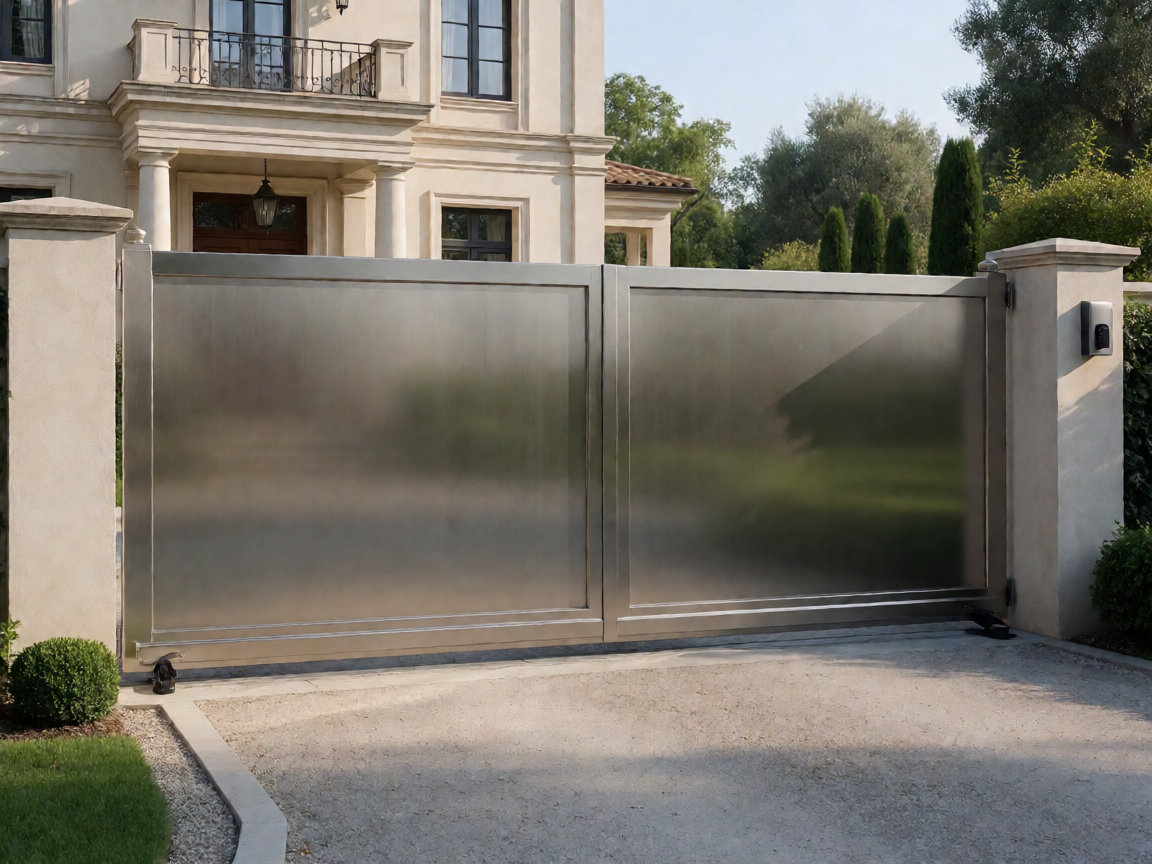
Maintenance Checklist for Reliable Daily Operation
Most automatic door failures are maintenance failures. A short routine keeps the system predictable.
- Monthly: clear tracks, guides, and thresholds of grit and leaves; test the safety sensors with an obstruction; check that the leaf closes fully against the weather seal.
- Quarterly: lubricate hinges, rollers, and pivot points with a lithium-based or silicone grease; inspect fasteners and re-torque where needed; test the manual release.
- Twice yearly: clean and inspect drain holes in the bottom rail, touch up any scratched coating with matching touch-up paint, and check that the frame remains square.
- Annually: have the control board, limit switches, and battery backup inspected by a technician; test the smart fingerprint lock and access control against backup codes; check the operator mounting bolts and drive chain or arm tension.
On coastal sites, shorten the interval for cleaning and touch-up, and rinse salt residue from aluminum surfaces every few weeks.
Conclusion
Reliable automatic doors come down to three decisions: specifying the right material and wall thickness, matching the operator to the actual leaf weight, and committing to a maintenance routine that takes less than an hour a month. Get those right, and the gate will still open smoothly in year ten. Get them wrong, and every storm becomes a repair call. For villa owners, builders, and architects, the specification sheet and the maintenance schedule are equally important documents.
Meta description: A practical maintenance checklist and specification guide for automatic doors and villa gates, covering materials, hardware, and daily reliability.