Access Control Doors: Specifications for Secure Entry
Access Control Doors: Specifications for Secure Entry
Specifying exterior doors for a villa or high-end residential project involves more than choosing a style. Owners, builders, and architects must balance security, rust resistance, low maintenance, custom sizing, and installation concerns—all while meeting modern access control expectations. Access control doors are not a single product; they are a system of frame, panel, hardware, and locking technology engineered to work together. Whether you are sourcing a custom aluminum courtyard gate, a cast aluminum villa door, or a glass spliced exterior door, understanding the specifications behind secure entry helps you avoid costly callbacks and long-term performance issues.
Core Material Introduction
Aluminum is the dominant material for modern access control doors because it addresses the primary failure points of steel and wood: corrosion and maintenance. Extruded aluminum profiles, typically 6063-T5 or 6061-T6, offer an excellent strength-to-weight ratio, dimensional stability, and resistance to rust. For coastal villas or regions with high humidity, aluminum avoids the rust bleeding and paint blistering common with steel doors.
Cast aluminum villa doors use a different manufacturing process. Molten aluminum is poured into molds to create thick, detailed panels that mimic traditional ironwork without the weight or rust risk. Cast aluminum is denser than extruded profiles, which improves impact resistance and allows for deeper relief patterns. A custom aluminum courtyard gate often combines extruded frames for structural rigidity with cast aluminum decorative elements for visual presence.
Surface treatment determines long-term appearance. Powder coating provides a durable, uniform finish in any RAL color. PVDF coating offers superior UV and salt-spray resistance for extreme climates. Anodizing creates a metallic finish that will not chip or peel. Wood-grain sublimation can replicate the warmth of timber while retaining aluminum's low maintenance.
Product Structure & Specification Explanation
Access control doors are specified by component. The table below outlines typical ranges for villa exterior applications. Exact values depend on door size, wind load, security rating, and local codes.
| Component | Standard Specification | Premium Specification | Notes |
|---|---|---|---|
| Frame thickness | 2.0–2.5 mm | 3.0–4.0 mm | Heavy-duty frames resist forced entry and support large gate leaves. |
| Plate thickness | 1.2–1.5 mm aluminum sheet | 1.8–2.0 mm sheet or 8–12 mm cast panel | Cast aluminum panels add rigidity and decorative depth. |
| Filling | Aluminum honeycomb filling | Aluminum honeycomb + polyurethane or rock wool | Honeycomb improves stiffness without excess weight; additional insulation boosts thermal and acoustic performance. |
| Glass | 6–8 mm tempered | 8–12 mm laminated or insulated glass unit | Glass spliced exterior doors require safety glass and proper gasketing. |
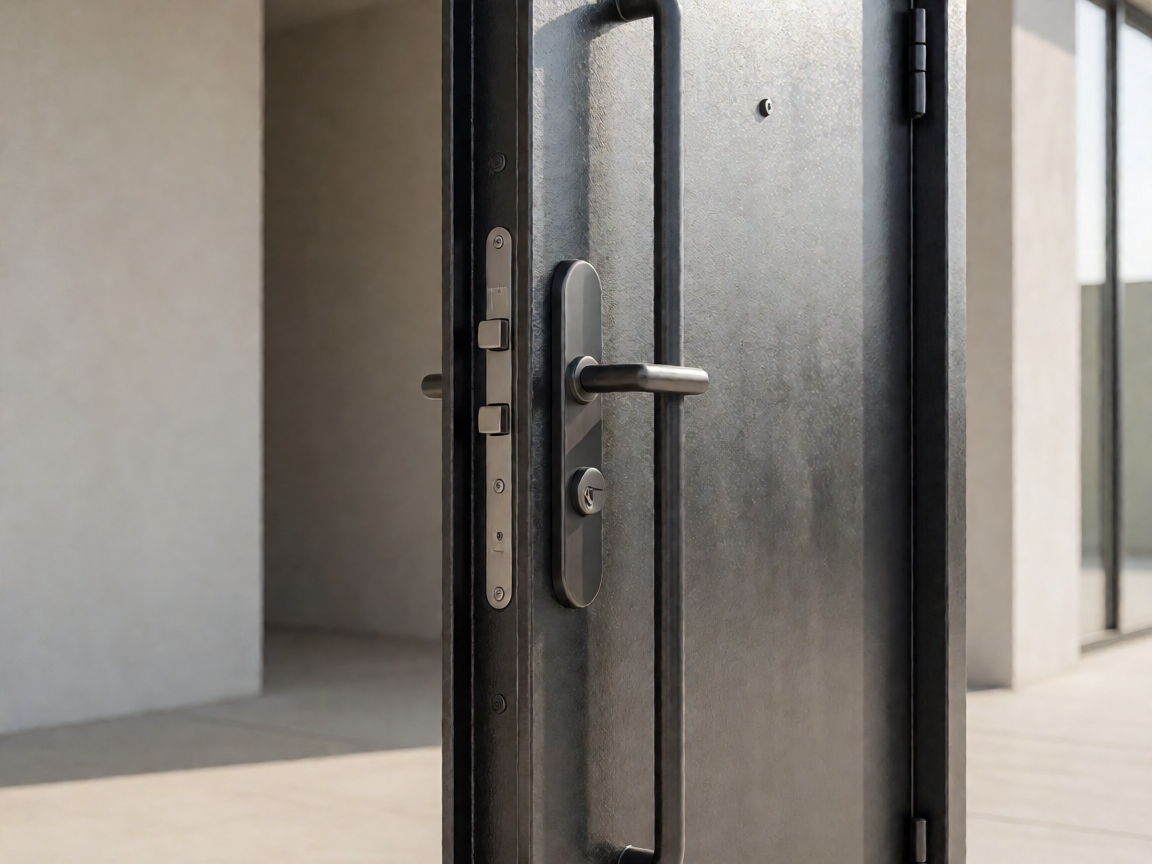
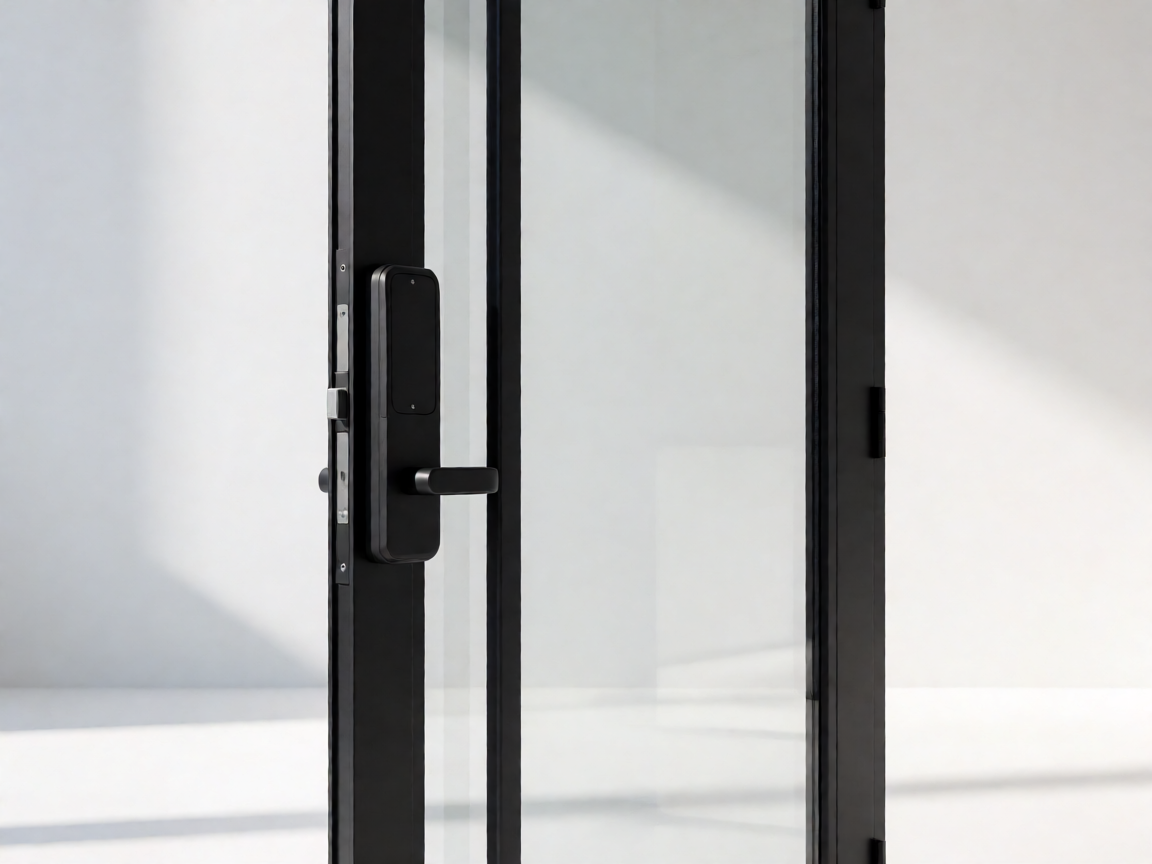
| Lock system | Multi-point mechanical lock | Smart fingerprint lock with mechanical override | Access control integration requires wiring provisions and fail-safe or fail-secure configuration. |
Frame thickness directly affects security and hardware compatibility. Thin frames flex under impact and may not accept heavy multi-point locks. Plate thickness determines panel stiffness; a thicker plate resists denting but increases weight. Aluminum honeycomb filling is a core material made from expanded aluminum foil formed into hexagonal cells. It bonds to the door skins to create a stiff, lightweight sandwich panel that resists warping and improves sound insulation. For glass spliced exterior doors, the glass is captured in aluminum profiles with EPDM gaskets and drainage channels to prevent water ingress. The lock system is the heart of access control. A smart fingerprint lock can store multiple users, log entry events, and integrate with home automation, but it must be paired with a mechanical cylinder or keypad for emergency access.
Key Advantages for Villa Exterior Applications
Villa exteriors demand doors that perform across four dimensions: security, weather resistance, maintenance, and aesthetics. Access control doors made from aluminum with proper specifications deliver on all four.
- Security: Multi-point locking engages the frame at several points, making pry attacks difficult. Reinforced frames and cast aluminum panels resist impact. Access control readers and smart fingerprint locks eliminate keyed entry vulnerabilities.
- Rust resistance: Aluminum naturally forms an oxide layer that protects against corrosion. Powder coating and PVDF finishes add a barrier against salt spray, acid rain, and UV radiation. This is critical for coastal and industrial environments.
- Low maintenance: Unlike wood, aluminum does not need staining, sealing, or repainting. A periodic wash with mild soap keeps the finish looking new. Hardware may need occasional lubrication.
- Thermal and acoustic performance: Aluminum honeycomb filling combined with thermal breaks and insulated glass reduces heat transfer and outside noise. This improves comfort and energy efficiency.
- Design flexibility: Aluminum can be extruded into complex profiles and cast into ornate details. Finishes range from matte black to bronze, wood grain to bright anodized.
Available Custom Options
Customization is standard for villa projects. Manufacturers such as ZW Doors offer the following options to match architectural intent and access control needs.
- Finish: Powder coating (RAL or custom), PVDF, anodized, wood-grain sublimation, brushed or polished effects.
- Color: Any RAL color, dual-color finishes, metallic tones. Color matching to existing façade or window frames is available.
- Opening direction: Inward or outward swing, left or right hand, single or double leaf. Sliding, pivot, and folding systems are also available for custom aluminum courtyard gates.
- Smart lock: Integration of a smart fingerprint lock, keypad, RFID card reader, mobile app control, or intercom. Mechanical override should always be included.
- LED decoration: Integrated LED strips in the frame, handle, or transom for visibility and ambiance. Low-voltage wiring must be planned during construction.
- Transom lintel: Fixed transom above the door for additional daylight, ventilation, or architectural proportion. Can include glass, louvers, or cast aluminum panels.
For a cast aluminum villa door, custom casting allows unique patterns, crests, or geometric designs. A glass spliced exterior door can combine aluminum framing with large glass panels to create a modern entry while maintaining security through laminated glass and reinforced locks.
Buying & Selection Tips
Use the following checklist to avoid common specification and installation problems.
- Measure the rough opening and finished opening. Account for frame thickness, shim space, and clearances. For access control doors, confirm the handing and swing before fabrication.
- Check local codes. Egress requirements, wind load ratings, and accessibility standards vary by region. In coastal areas, specify higher corrosion protection.
- Verify security ratings. Ask for test reports such as EN 1627 RC2 or RC3, or equivalent. Confirm that the frame and lock meet the same rating.
- Request finish samples. Color can vary between monitors and production batches. A physical sample ensures approval.
- Plan for access control wiring. Smart locks, keypads, and electric strikes need power and data cables. Coordinate with the electrician before walls are closed.
- Confirm installation method. Subframe anchoring, shimming, and sealing details affect long-term performance. Ask for shop drawings and installation instructions.
- Review warranty terms. Look for coverage on finish, hardware, and structural integrity. A reputable manufacturer stands behind their product.
For custom aluminum courtyard gates and cast aluminum villa doors, lead times can range from 4 to 12 weeks depending on complexity and finish. Factor this into the construction schedule.
Conclusion
Access control doors for villas require a specification-driven approach. From frame thickness and aluminum honeycomb filling to glass selection and smart fingerprint lock integration, each component affects security, durability, and maintenance. By choosing the right materials, finishes, and custom options, builders, architects, and owners can achieve a secure, rust-resistant, low-maintenance entry that enhances the property. ZW Doors provides technical support and customizable access control doors for residential projects. Contact our team to discuss your next villa entry specification.
Meta Description: Specify secure access control doors for villas: aluminum honeycomb filling, smart fingerprint locks, custom sizing, rust-resistant finishes.