Apartment & Building Entrance Doors: Warranty Terms to Review
Apartment & Building Entrance Doors: Warranty Terms to Review
When owners, builders, architects, and renovation contractors select entrance doors for apartment buildings, the conversation usually starts with security, rust resistance, maintenance requirements, and custom sizing. It ends with a purchase order. The warranty document attached to that order is often skimmed at best. Years later, when a door closer fails, a powder-coated finish chalks in coastal air, or a leaf sags on its hinges, those same terms decide who pays for the repair. This guide explains how door materials and specifications connect directly to warranty coverage, and which clauses deserve a careful read before you commit to a supplier.
Core materials and how they shape warranty coverage
Entrance doors for apartment blocks and multi-unit buildings are built from a small set of materials, and each one carries a different warranty profile. Understanding the difference helps you compare quotes fairly, because a ten-year warranty on one substrate is not the same as a ten-year warranty on another.
- Galvanized steel: Cost-effective and structurally strong. Warranty terms usually depend on coating thickness and whether cut edges are properly sealed.
- Aluminum alloy (typically 6063-T5): Naturally corrosion-resistant, which makes it the preferred choice for coastal and high-humidity projects. Most finish warranties run five to ten years, with longer terms available for premium coating systems.
- Cast aluminum panels: Used for decorative, heavier-profile doors. A cast aluminum villa door is often covered under a separate finish clause because the casting surface and the coating are warranted differently.
- Stainless steel (304 or 316): Specified where salt exposure is severe. Grade 316 carries a materially better warranty position than 304 in marine environments.
- Finish systems: Powder coating, PVDF, anodizing, and sublimated wood-grain finishes each have their own coverage period, exclusions, and cleaning requirements.
Most manufacturers split their warranty into four separate parts: structural integrity, finish, hardware, and electronic components. A single "10-year warranty" headline frequently refers only to the structure, while the finish is covered for five years and any electronic lock for two.
Product structure and specification terms referenced in warranties
Warranty disputes almost always trace back to a specification detail that was never written down. These are the values worth documenting at the quotation stage.
| Component | Typical specification | Warranty relevance |
|---|---|---|
| Frame thickness | 1.8–2.5 mm aluminum; 1.5–2.0 mm steel | Thinner frames are more prone to distortion; some warranties exclude deflection claims below a minimum wall thickness. |
| Leaf / plate thickness | 40–55 mm overall leaf thickness; 0.8–1.2 mm face plate | Determines impact resistance and whether the door can accept multi-point hardware. |
| Filling | Aluminum honeycomb filling, rock wool, or injected polyurethane | Aluminum honeycomb filling keeps leaves light and flat, resisting warping—a common exclusion if flatness is not maintained. |
| Glass | 6–10 mm tempered or laminated; insulated units for exterior use | Sealed-unit fogging and glass breakage are nearly always excluded; check who warrants the glazing separately. |
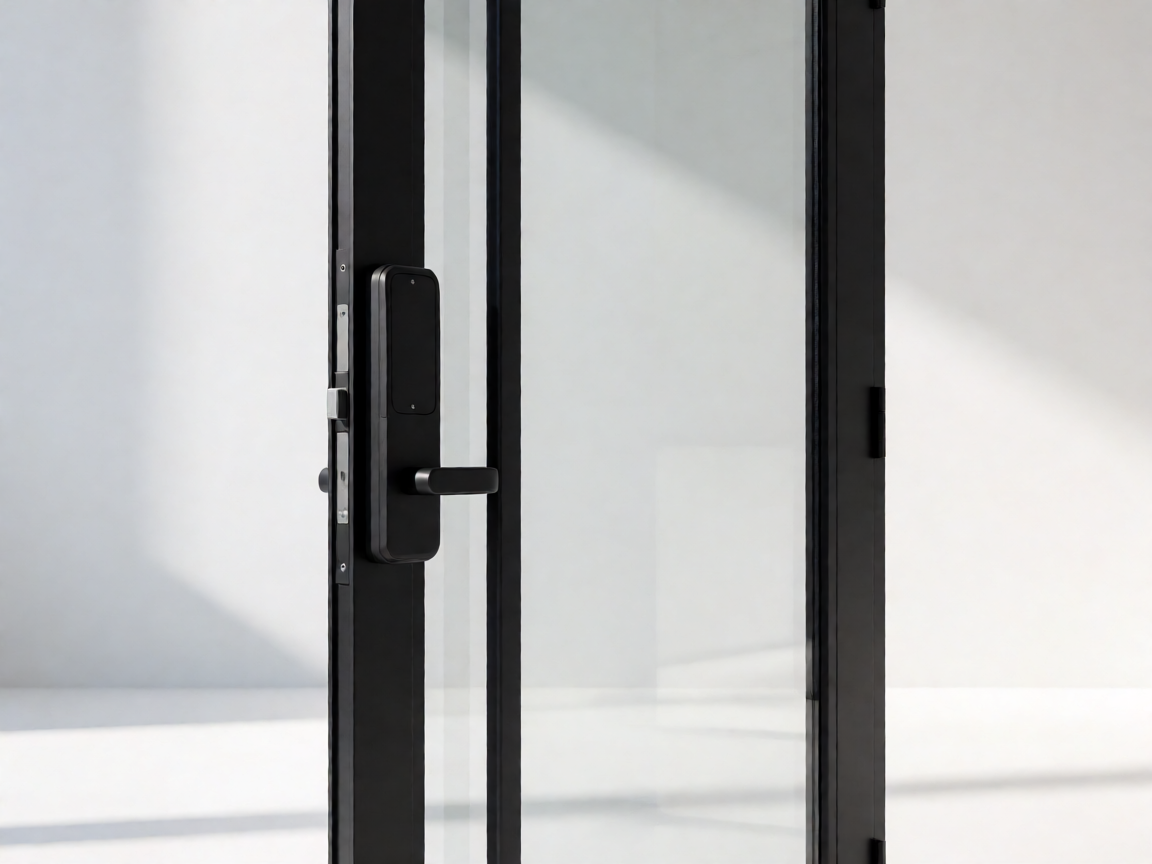
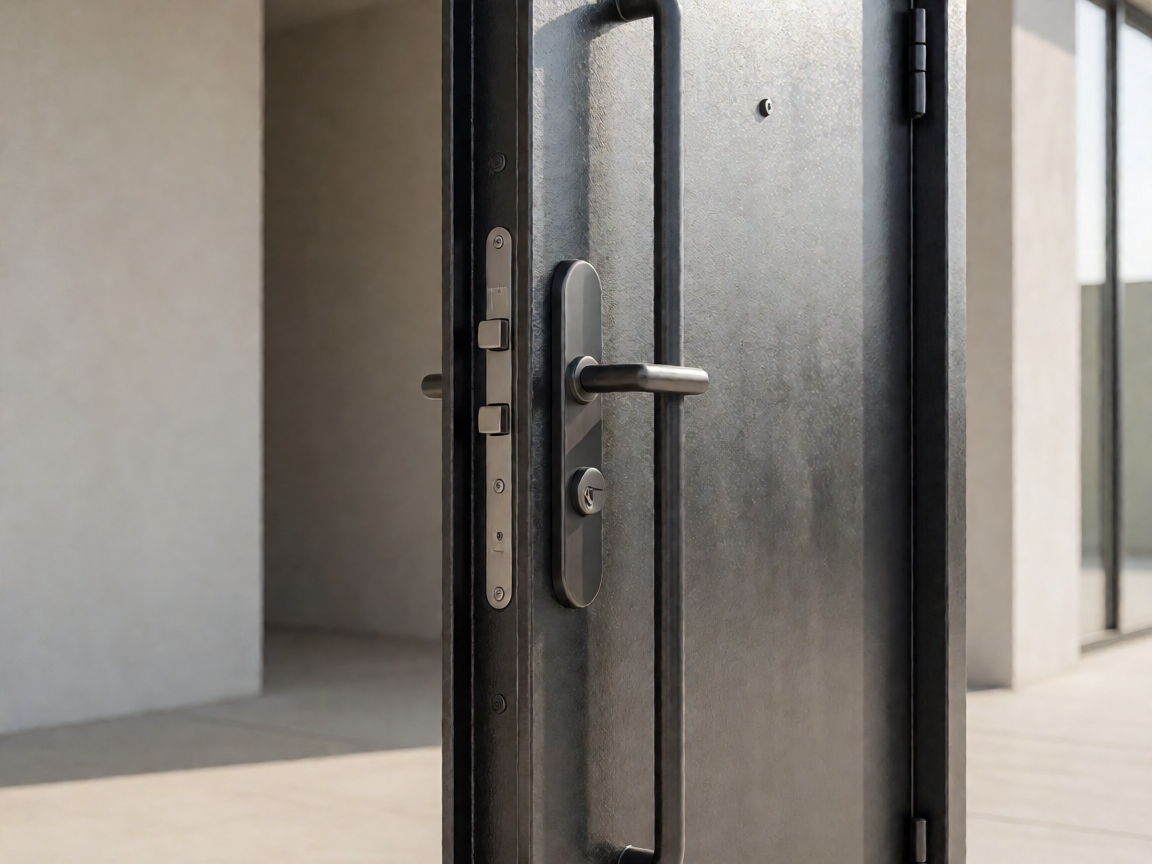
| Lock system | Multi-point mechanical lock, electric strike, or smart fingerprint lock | Mechanical hardware and electronics are usually covered for different periods and by different parties. |
Ask for test documentation rather than a verbal assurance: salt-spray hours, cycle-test counts for hinges and closers, and fire-rating certificates where required. A supplier who can produce these reports is also more likely to honor claims.
Key advantages for apartment, multi-unit, and villa entrances
Choosing the right door package reduces warranty risk before installation even begins:
- Security: Multi-point locking with reinforced frames resists forced entry—critical in shared corridors and lobbies where doors are the first line of defense.
- Corrosion resistance: Aluminum and properly coated steel hold up in coastal and industrial environments where untreated metal fails within a few seasons.
- Low maintenance: A wash-down twice a year is usually sufficient. Aggressive cleaning agents can void finish warranties, so confirm what the manufacturer permits.
- Acoustic and thermal performance: Dense filling, thermal breaks, and double seals reduce corridor noise—a frequent complaint in residential buildings.
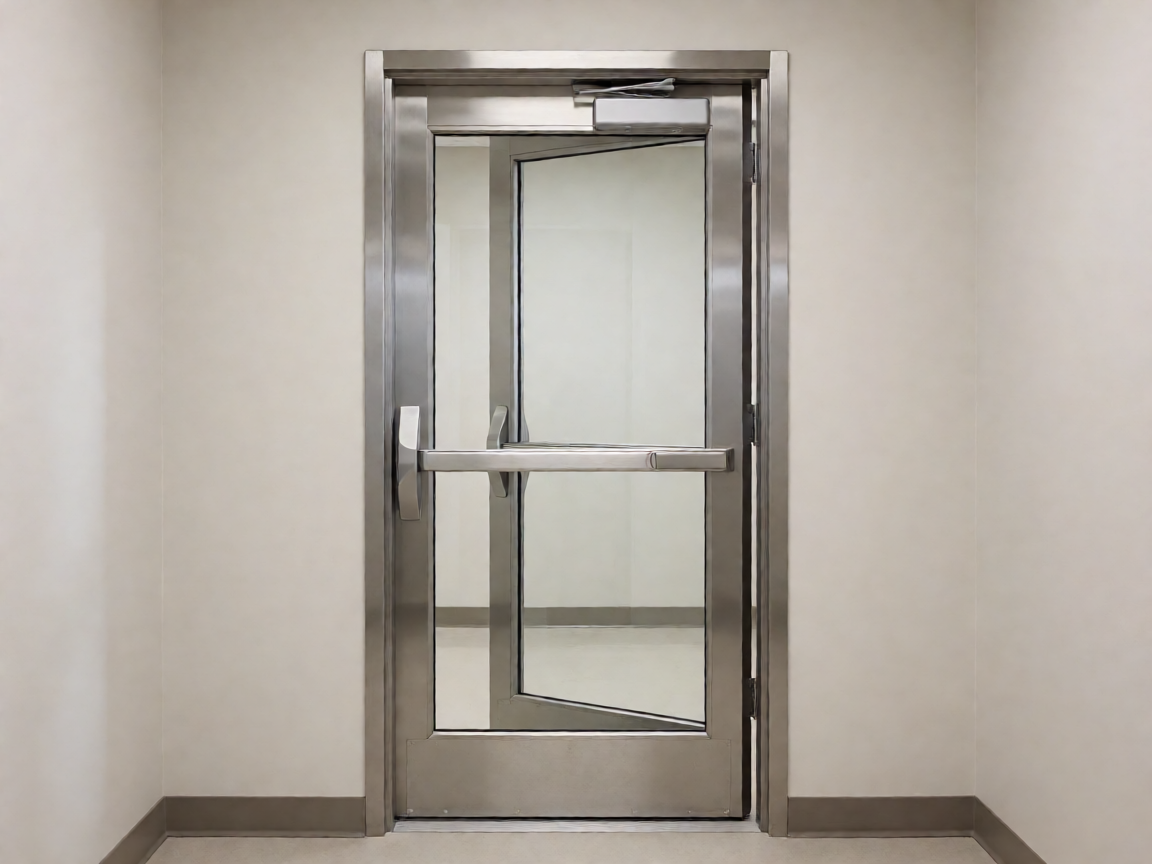
- Fire and egress compliance: Where fire ratings or emergency exit hardware are mandatory, the certificate must be issued for the complete assembly, not just the leaf.
- Dimensional stability: Wide entrances stay square over time when frame sections and hinges are correctly sized for the leaf weight.
Available custom options and their warranty implications
Customization is where entrance doors become genuinely project-specific—and where warranty terms become most varied.
- Finish and color: Any RAL color is achievable; confirm the coating system, not just the shade.
- Opening direction: Left or right hand, inswing or outswing. Installing the wrong handing is an installation error, not a defect.
- Smart fingerprint lock: Convenient for multi-tenant buildings, but usually warranted for two years. Confirm who provides replacement parts and firmware support.
- LED decoration: Popular on feature entrances; the driver and wiring are separate electronic components with their own coverage.
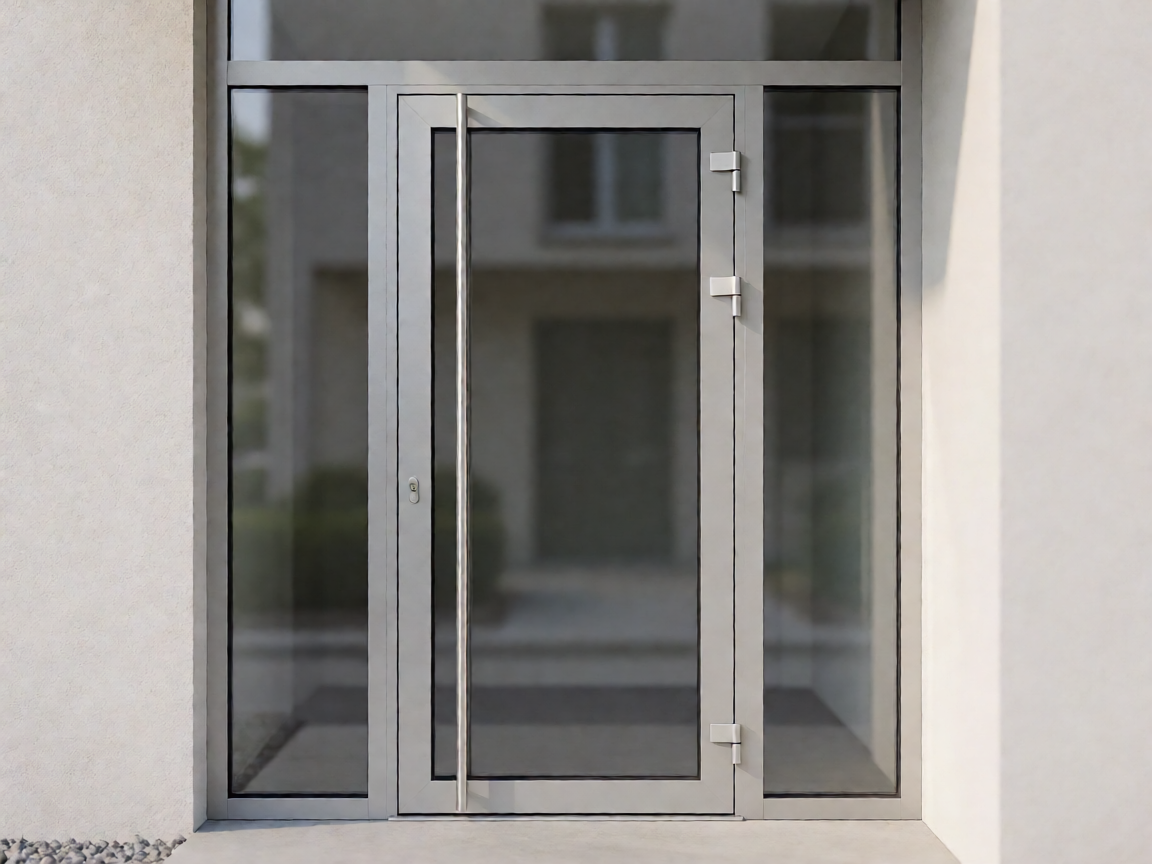
- Transom lintels and sidelights: Add light and presence. Specify how the transom is supported—an unsupported lintel is a structural claim waiting to be denied.
- Glass spliced exterior door: Metal-and-glass combinations require careful sealing; water ingress at the splice line is a common exclusion if drainage details are absent.
- Coordinated entrances: A custom aluminum courtyard gate, matching pedestrian door, and building entrance can be ordered as one package, often under a single warranty document.
Buying and selection tips: a warranty review checklist
- Confirm what is covered. Structure, finish, hardware, and electronics should be listed separately with their own durations.
- Read the exclusions. Coastal salt exposure, chemical cleaning, painting over factory finishes, and site modifications are commonly excluded.
- Check prorated versus full replacement. A "10-year warranty" may pay 100% in year one and 20% in year ten.
- Verify transferability. Multi-unit buildings change ownership; a warranty tied to the original purchaser has little value.
- Insist on certified installation. Most manufacturers void coverage when installation is not performed to their published instructions.
- Ask about response times and spare parts. A five-year warranty with no available hardware is worth less than a three-year warranty with a stocked parts program.
- Keep the submittal package. Specifications, test reports, and the signed warranty form are your evidence if a claim is contested.
Conclusion
Warranty terms are not legal boilerplate—they are a summary of how confident a manufacturer is in its own materials, structure, and finishing. When you review them alongside frame thickness, leaf construction, filling type, glazing, and lock hardware, the comparison between suppliers becomes far clearer. Spend twenty minutes on the warranty document before you order, and you will spend far less time and money on repairs after the building is occupied.
Meta description: Review warranty terms for apartment & building entrance doors: coverage periods, exclusions, finish and hardware clauses, and installation requirements.