Sliding Doors: Installation Factors for Smooth Operation
Sliding doors look simple, but smooth operation depends on far more than the visible panel. For villa owners, builders, architects, and renovation contractors, the real concerns are familiar: Will the door remain secure? Will the frame resist rust and corrosion? How much maintenance will it need? Can it be sized to a non-standard opening? And most importantly, will it still glide smoothly after years of daily use? The answers start with material selection, continue through structure and specification, and end with installation details that are easy to overlook. This guide explains the factors that determine whether sliding doors perform reliably in exterior residential applications.
Core Materials That Determine Sliding Door Performance
The base material sets the limits for strength, corrosion resistance, and dimensional stability. For exterior sliding doors, aluminum alloy frames are common because they balance rigidity with relatively low weight. A marine-grade or 6063-T5 aluminum alloy is often specified for coastal or humid climates, where salt air and moisture can attack lower-grade metals. Cast aluminum components are useful for decorative panels, handles, and structural brackets because they can be formed into detailed shapes while maintaining good resistance to rust.
Track and roller materials matter just as much as the frame. Stainless steel tracks, particularly 304-grade, resist rust better than painted steel and help maintain a consistent rolling surface. Rollers should use sealed bearings and durable wheels that do not flatten under load. In high-use exterior applications, hardware quality often determines whether sliding doors feel smooth after five years or begin to drag after one season. Projects that combine a custom aluminum courtyard gate with matching sliding door systems should confirm that all metal components share compatible corrosion protection and thermal expansion characteristics.
Product Structure and Specifications That Affect Installation
Installation success is largely designed into the product before the first anchor is fixed. Frame thickness, panel construction, glass specification, and lock system all influence how the door sits, moves, and seals. A typical exterior sliding door frame may range from 1.8 mm to 2.0 mm in wall thickness; heavier frames resist deflection better over wide openings, but they also require more precise anchoring and shimming.
- Frame thickness: Confirm the frame profile depth suits the wall construction and leaves enough room for adjustment during installation.
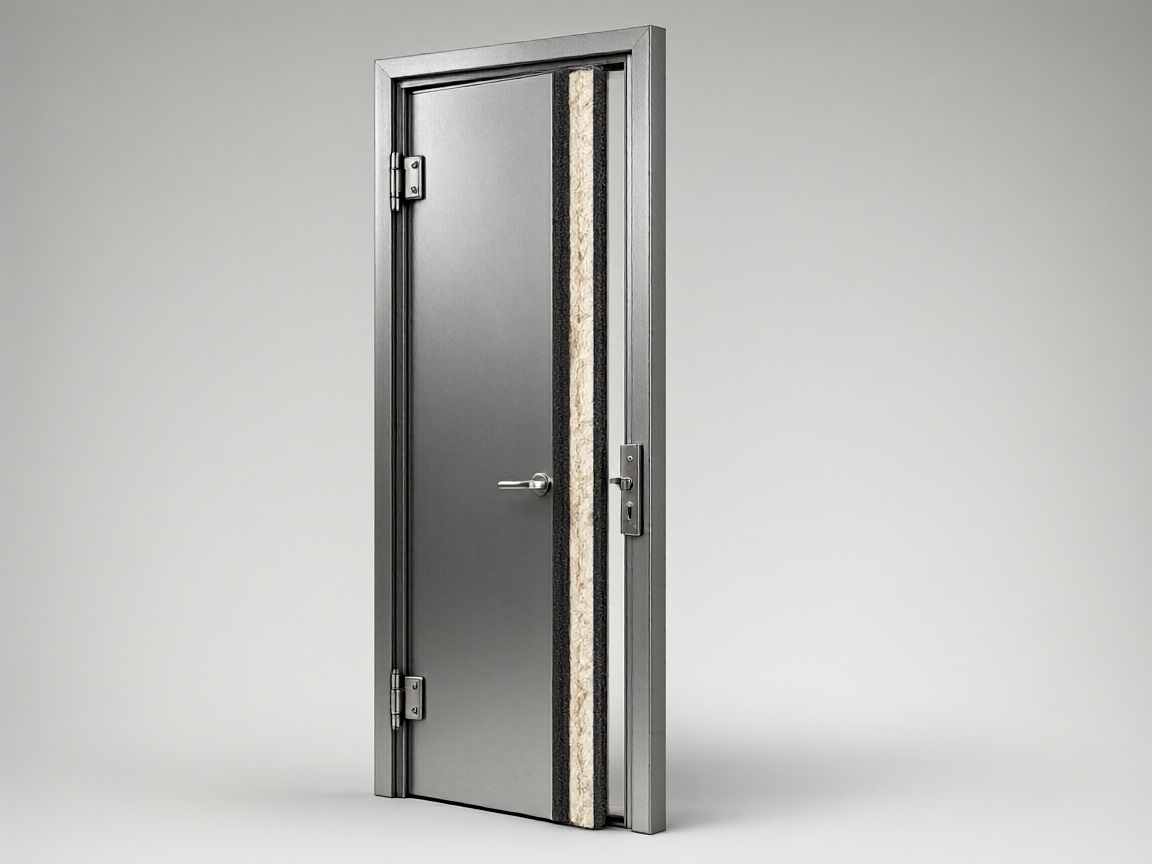
- Plate thickness: Panel skins that are too thin can oil-can or distort when hardware is attached; thicker skins improve stability and sound insulation.
- Filling: Aluminum honeycomb filling provides a stiff, lightweight core that helps large panels resist bending without excessive weight.
- Glass: Tempered or laminated glass in 8 mm to 12 mm thickness is common for exterior use; glass spliced exterior door designs should use compatible gaskets and drainage paths.
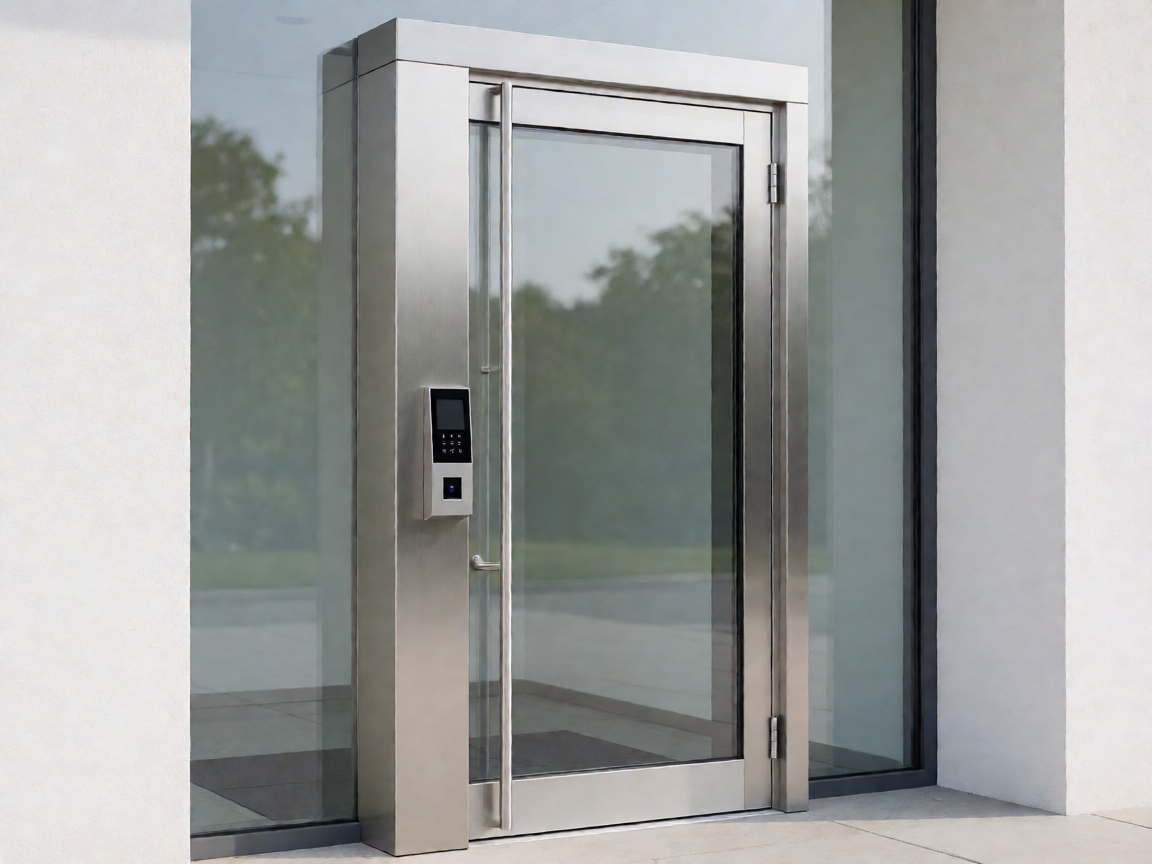
- Lock system: Multi-point locking improves security but requires precise alignment between the frame and panel; a smart fingerprint lock adds convenience but needs a stable mounting surface and wire-free or well-routed power.
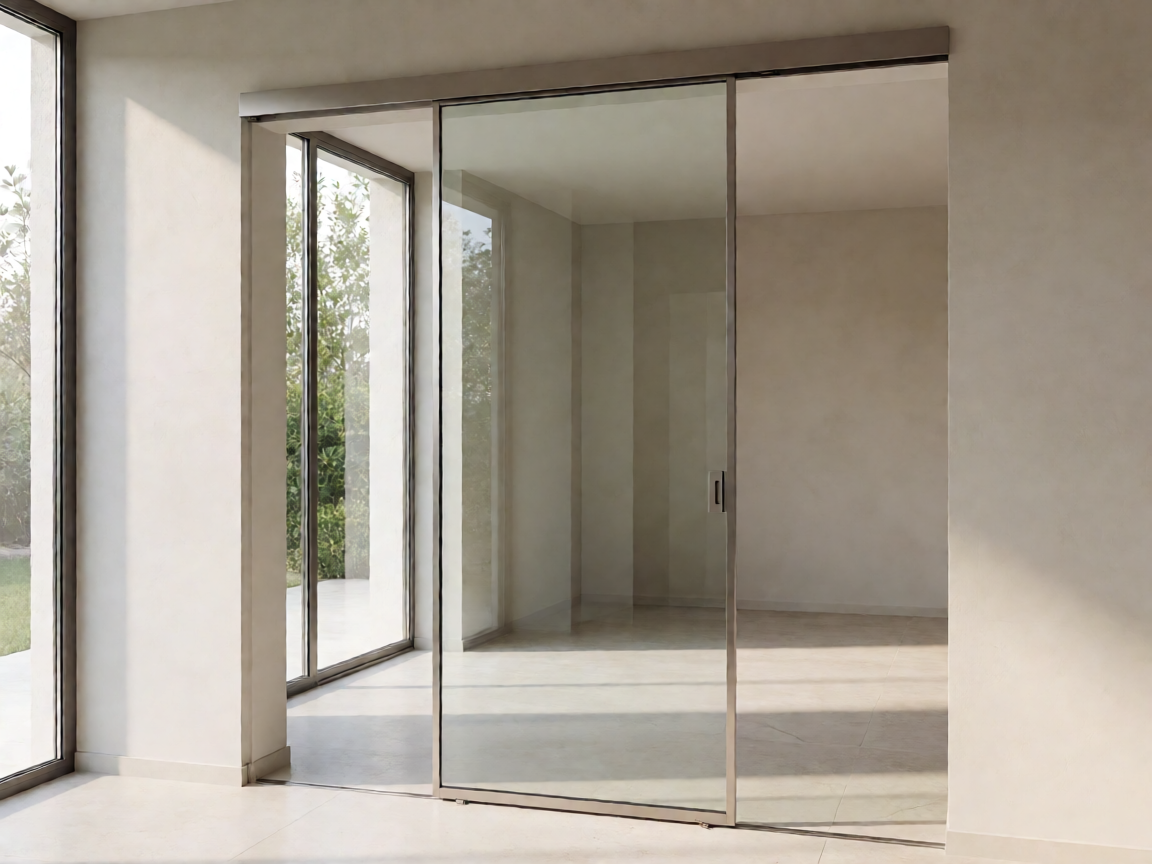
Track configuration directly affects installation. Bottom-rolling systems need a level floor and a recessed or surface-mounted track with clear drainage. Top-hung systems require a strong header beam and precise vertical alignment. In both cases, the opening should be measured at multiple points, and the floor should be checked for level within about 2 mm over a 2 m span. If the floor falls away, the door may roll open on its own; if the header is out of level, the panel may rub against the frame.
Key Advantages for Villa Exterior Applications
Well-specified sliding doors offer practical benefits for villa exteriors. Large panels can open wide without the clearance needed by swing doors, which is useful for terraces, pool areas, and courtyard entrances. Multi-point locking and reinforced frames improve security without making the door difficult to operate. Powder-coated or anodized aluminum surfaces resist rust and require only occasional cleaning, reducing long-term maintenance compared with painted steel or untreated wood.
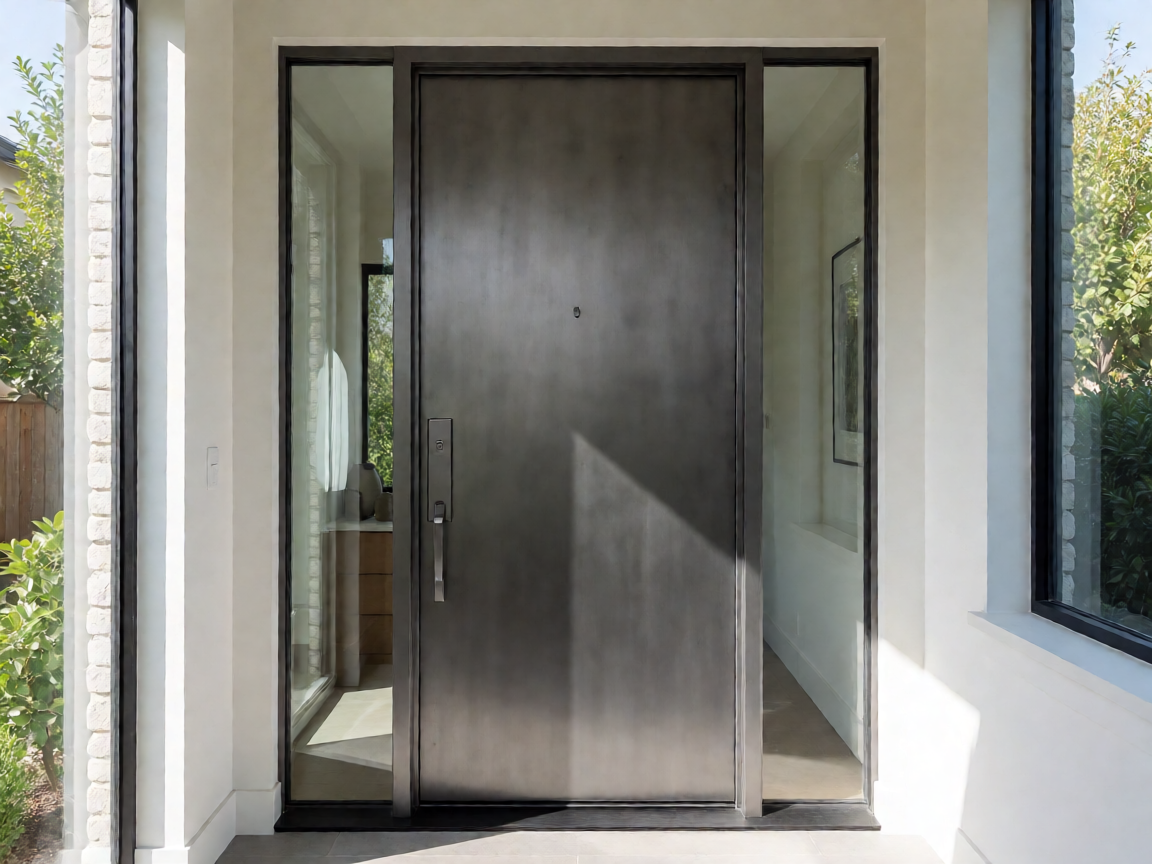
Glass-forward designs increase natural light and connect indoor and outdoor spaces, while cast aluminum villa door panels can add architectural detail without sacrificing weather resistance. Integrated smart fingerprint locks allow keyless entry for family and service providers, and a glass spliced exterior door can combine fixed and sliding sections to suit the opening. The common thread is that these advantages depend on correct installation: a secure lock is only secure if the frame is plumb, and a low-maintenance finish is only effective if water drains away from the track.
Available Custom Options
Customization should solve site conditions, not create new installation problems. Available options typically include:
- Finish: Powder coating, anodized finishes, and wood-grain effects for different architectural styles.
- Color: Standard RAL colors or custom matches to coordinate with facades and window frames.
- Opening direction: Left, right, or bi-parting configurations based on traffic flow and wall space.
- Smart lock: Fingerprint, PIN, and app-based entry systems with mechanical override.
- LED decoration: Integrated lighting for entrances and covered outdoor areas, with weather-rated components.
- Transom lintel: Fixed upper glazing or structural transoms that extend the opening height and improve proportion.
For projects that include a custom aluminum courtyard gate, specify the sliding door and gate as a coordinated system where possible. Consistent frame depths, hardware finishes, and lock interfaces simplify installation and improve the final appearance.
Buying and Selection Tips for Smooth Installation
Before ordering, confirm the structural support above the opening. Top-hung sliding doors transfer load to the header, while bottom-rolling systems transfer load to the floor and track. Check that the wall or beam can accept anchors without cracking, and plan for shims and adjustment tolerances. Verify drainage: exterior tracks should not trap water against the threshold, and weep holes must remain clear.
- Measure the opening at the top, middle, and bottom, and record the smallest dimension.
- Confirm the track type, panel weight, and required clearance for installation and future service.
- Check that the lock system and smart fingerprint lock align with the chosen frame profile.
- Review the finish warranty and corrosion protection for the project climate.
- Use an installer experienced with large sliding panels, and test operation before sealing the perimeter.
At ZW Doors, the focus is on matching material specifications and custom sizing to real site conditions so that sliding doors operate smoothly long after handover. The right combination of aluminum frame, aluminum honeycomb filling, quality glass, and precise installation is what turns a good-looking door into a dependable exterior system.
Sliding doors perform best when material, structure, and installation are treated as one system. Start with corrosion-resistant aluminum and quality hardware, confirm frame and track specifications against the opening, and plan for level, drainage, and anchor support before installation begins. With those factors controlled, custom sizes and smart lock options can be added without compromising smooth, secure operation.