Access Control Doors: Installation Planning for Secure Entries
Access Control Doors: Installation Planning for Secure Entries
Specifying an exterior door for a villa or high-end residential project rarely fails because of the door itself. It fails at the interface — between the door leaf, the wall opening, and the access control system that has to work reliably for the next fifteen years. Owners worry about forced entry, coastal humidity that rusts steel frames from the inside out, finishes that fade after two summers, and openings that are a few centimetres off any standard size. Builders and renovation contractors worry about lead times, on-site rework, and whether the low-voltage cable for a keypad or smart fingerprint lock will actually reach the lock case. This guide covers the material and specification decisions behind secure entries, and the installation planning steps that keep them predictable.
Core Material: What Villa Exterior Doors Are Actually Made Of
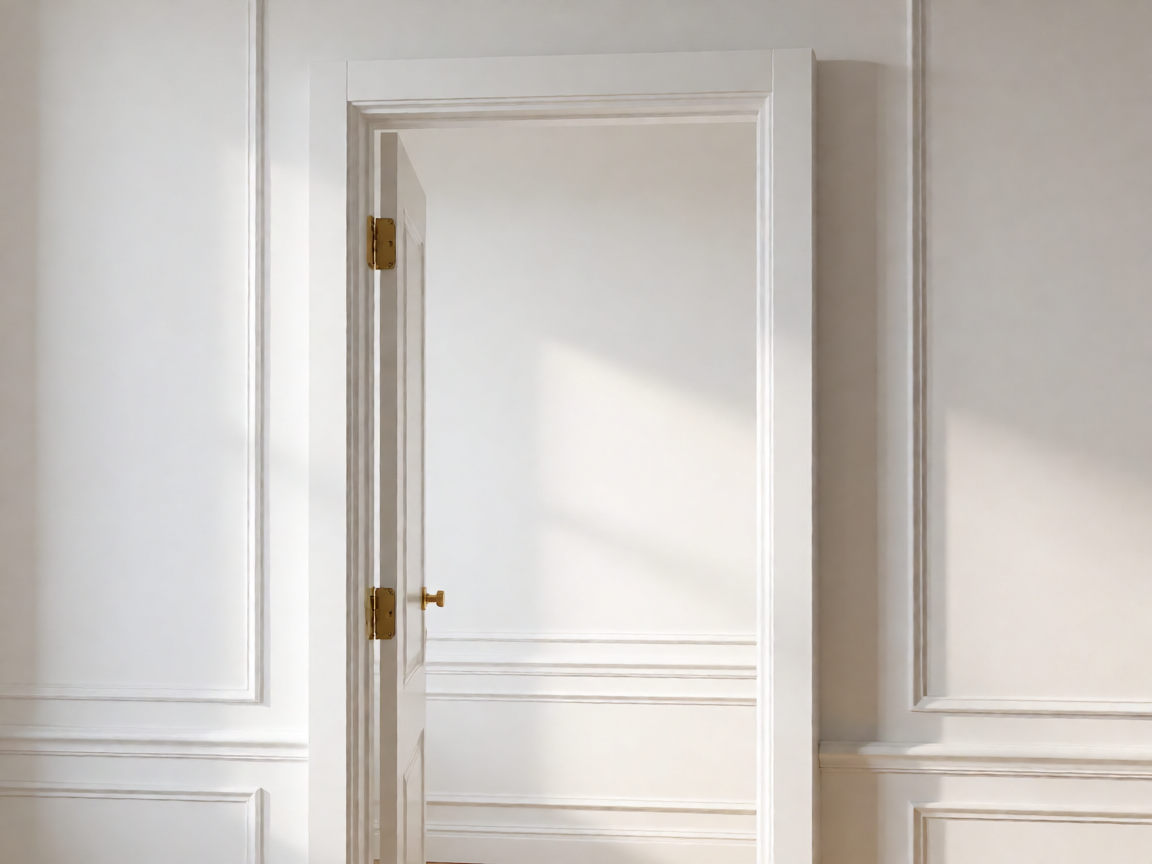
Most residential exterior doors fall into three material families: steel, timber, and aluminum. Steel offers strength but demands ongoing corrosion protection, particularly within 10 km of a coastline. Timber looks warm but moves with humidity, which eventually affects locking alignment — a serious problem when the door carries an access control lock. Aluminum alloy extrusions, typically 6063-T5, solve both issues: the material does not rust, dimensional stability is high, and modern powder coating systems hold colour for 10–15 years in exterior use.
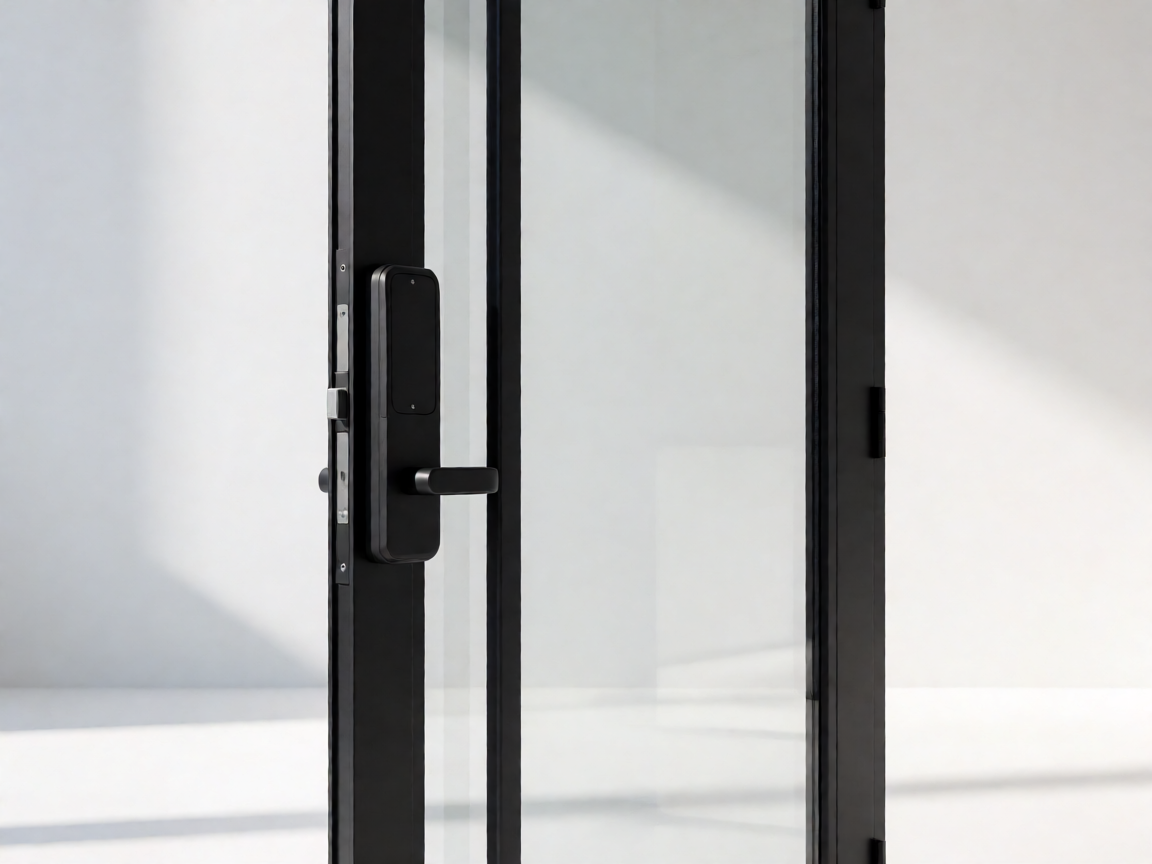
For higher-end projects, a cast aluminum villa door combines a thick aluminum frame with cast panels produced from a mould. The casting process allows deep relief patterns, scrollwork, and panel profiles that would be impossible to press from sheet metal, while keeping the weight manageable for standard hinges. Where transparency is required — entrance foyers or covered courtyards — a glass spliced exterior door uses narrow aluminum stiles and rails with laminated or tempered glazing, so the entry reads as glass but still carries a certified locking system. Thermal breaks should be present in any door installed in a climate with meaningful winter temperatures; without them, condensation forms on the interior frame and hardware begins to corrode from the inside.
Product Structure and Specification Explained
Specification sheets vary widely between suppliers, so compare the following values directly rather than relying on marketing descriptions.
| Component | Typical specification | Why it matters |
|---|---|---|
| Frame profile thickness | 2.0–3.0 mm extruded aluminum | Below 1.8 mm, frames deflect under wind load and anchor points can deform |
| Door leaf thickness | 55–90 mm | Determines insulation, rigidity and which lock bodies will fit |
| Face panel | 8–12 mm cast aluminum, or 1.5–2.0 mm sheet | Cast panels resist denting and hold deep decorative patterns |
| Core filling | Aluminum honeycomb filling, PU foam or mineral wool | Honeycomb gives the best stiffness-to-weight ratio; mineral wool adds fire performance |
| Glazing | 5+5 mm laminated or 6–8 mm tempered | Laminated glass stays in the frame after impact and improves acoustic performance |
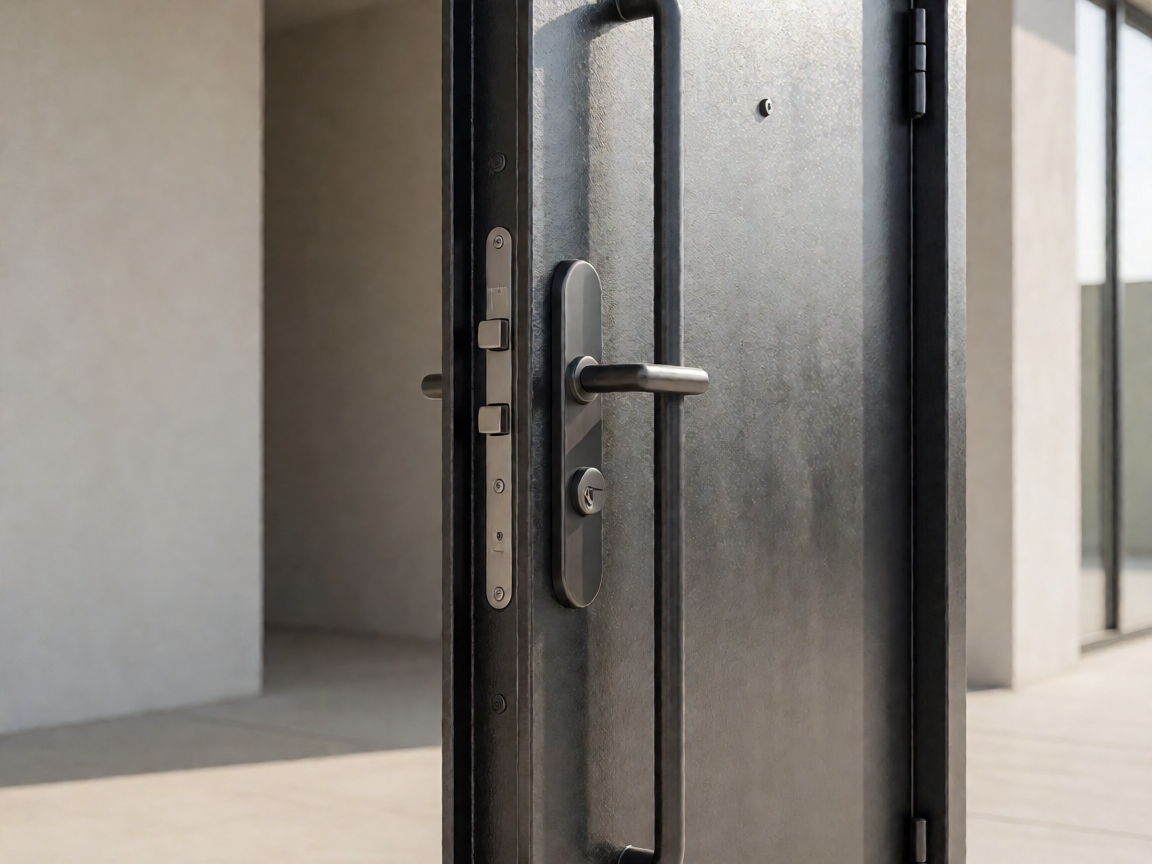
| Lock system | Mortise body, multipoint locking, electric strike, smart fingerprint lock | Multipoint locking secures the leaf at top, bottom and side |
| Hinges | 3D-adjustable stainless steel, 3 hinges above 1.2 m leaf width | Adjustability allows alignment correction after settlement |
| Threshold | Aluminum or stainless steel, 20–40 mm | Must clear the floor finish and drain water away from the interior |
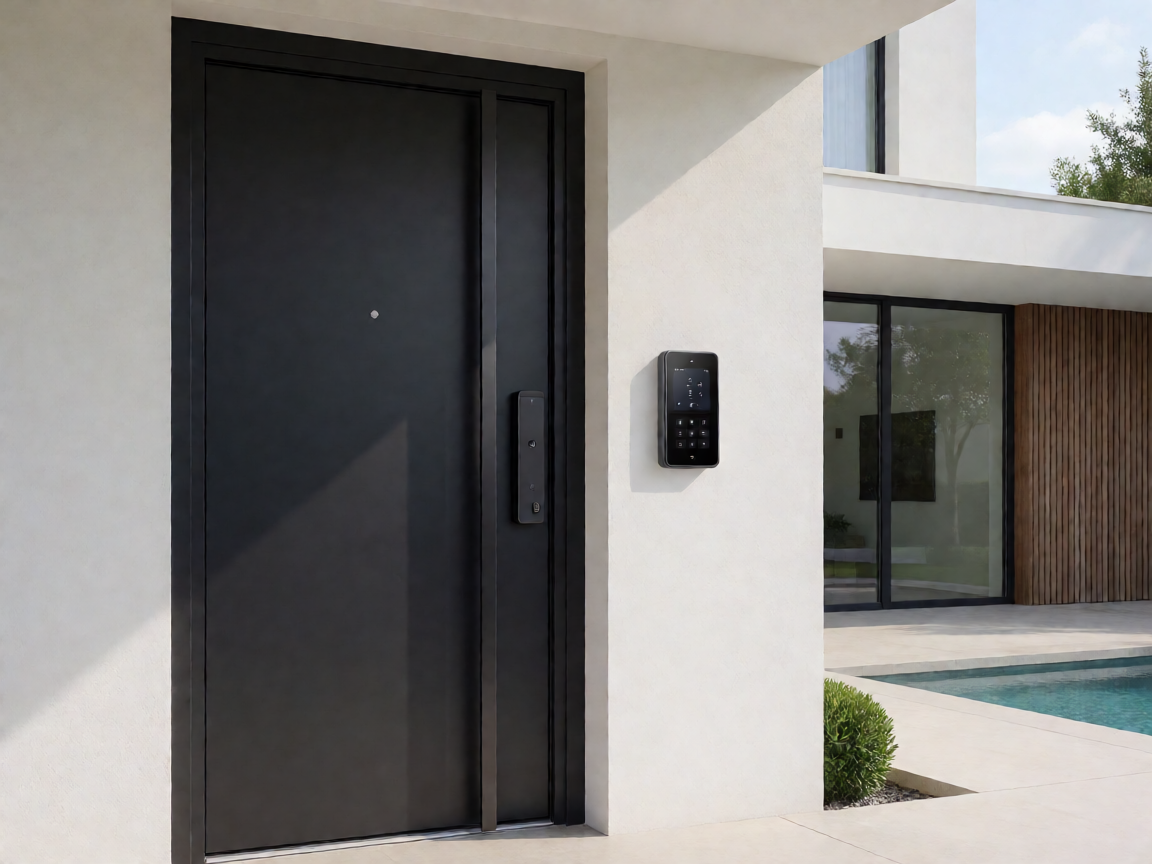
For access control specifically, three details decide whether the installation goes smoothly. First, confirm the lock case depth against the leaf thickness — a multipoint or electric strike assembly needs 45–60 mm of internal depth. Second, confirm cable routing: most installers prefer a 20–25 mm conduit cast or drilled through the hinge-side jamb, with a pull wire left in place. Third, confirm power. Battery-powered smart fingerprint locks need nothing beyond the door itself, but hardwired strikes and video entry stations require a low-voltage supply terminating within roughly one metre of the frame.
Key Advantages for Villa Exterior Applications
- Corrosion resistance. Aluminum does not rust, which makes it the practical choice for coastal and high-humidity regions where painted steel fails within a few seasons.
- Low maintenance. Annual washing with mild detergent is usually sufficient; there is no repainting cycle and no swelling or warping.
- Security. Multipoint locking plus a reinforced frame anchor pattern resists levering and spreading attacks far better than a single-point lock on a timber leaf.
- Stable geometry. Because aluminum moves very little with moisture, locks and hinges stay aligned — critical for electronic locking hardware.
- Design flexibility. Panels, glazing and finishes can be combined to match facade materials, from a solid custom aluminum courtyard gate to a fully glazed entrance.
- Integration-ready. Frames can be prepared at the factory for conduits, electric strikes and reader mounting, avoiding site drilling through finished surfaces.
Available Custom Options
Exterior doors for villas are almost always made to order, and the following options are commonly available from established manufacturers:
- Finish: architectural powder coating, PVDF coating for extreme UV exposure, anodised finishes, or wood-grain sublimation for a timber appearance without the maintenance.
- Colour: standard RAL or custom-matched to the facade, window frames or railing system.
- Opening direction: left or right hand, inward or outward swing, single or double leaf, and unequal double leaves for a main door with a fixed or operable secondary panel.
- Lock and access control: mechanical multipoint, keypad, electric strike, or a smart fingerprint lock with app-based user management and audit logs.
- LED decoration: integrated low-voltage strips in the frame or panel relief, useful for entrance visibility and wayfinding at night.
- Transom lintel and sidelights: fixed glazed panels above or beside the leaf to increase daylight and allow a taller entrance composition.
Buying and Selection Tips
- Measure the structural opening, not the old door. Record width, height and diagonal at three points; masonry openings are rarely square.
- Confirm the wall type. Brick, block, timber frame and insulated concrete form walls need different anchor strategies and reveal depths.
- Plan the access control before ordering. Decide the lock type, reader position and power source first, then have the frame prepared accordingly.
- Check load and wind ratings against local building codes, especially for exposed sites and large double leaves.
- Request a finish sample and a hardware schedule. Colours read differently on screen, and hardware substitutions are the most common cause of site delays.
- Confirm lead time, shipping protection and site storage requirements. Aluminum frames scratch easily and should be stored upright on timber battens, never laid flat on concrete.
- Verify documentation: material certificates, coating warranties and test reports for locking hardware.
Conclusion
A secure entry is a system, not a single product. Get the material right — aluminum alloy with a proper thermal break for most villa applications — then match the frame thickness, panel construction, filling and lock specification to the actual exposure and usage of the property. Finally, treat access control as a design decision made at the drawing stage rather than a task left to the electrician on site. When the conduit is in the jamb, the lock case depth is correct and the frame is anchored to a sound substrate, an access control door does its job quietly for years, with little more than an occasional wipe-down.