Custom Doors: Price Factors to Discuss Before Ordering
Custom doors are one of the few building components where two quotations for what looks like the same doorway can differ by three hundred percent. Buyers arrive with a familiar set of worries: will the gate survive salt air and driving rain without rusting, how much maintenance will it demand over a decade, can the factory really build to an irregular opening, and who pays if the frame does not match the concrete reveal on delivery day. Security sits underneath all of it, because a villa entrance is a visible point of access that has to resist forcing rather than simply photograph well. Price sits on top. This guide breaks down the material, structural, and finish decisions that move a quotation, so you can compare suppliers on identical terms.
Core Materials and What They Contribute to Price
Material choice is the single largest line item in any custom door quotation, and it usually accounts for 35–55% of the factory cost. The four families buyers encounter most often behave very differently.
- Extruded aluminum alloy: Typically 6063-T5 or 6061, chosen for consistent wall thickness, dimensional stability, and natural corrosion resistance. Extrusion dies can be made to almost any profile, which is why aluminum dominates custom sizing work.
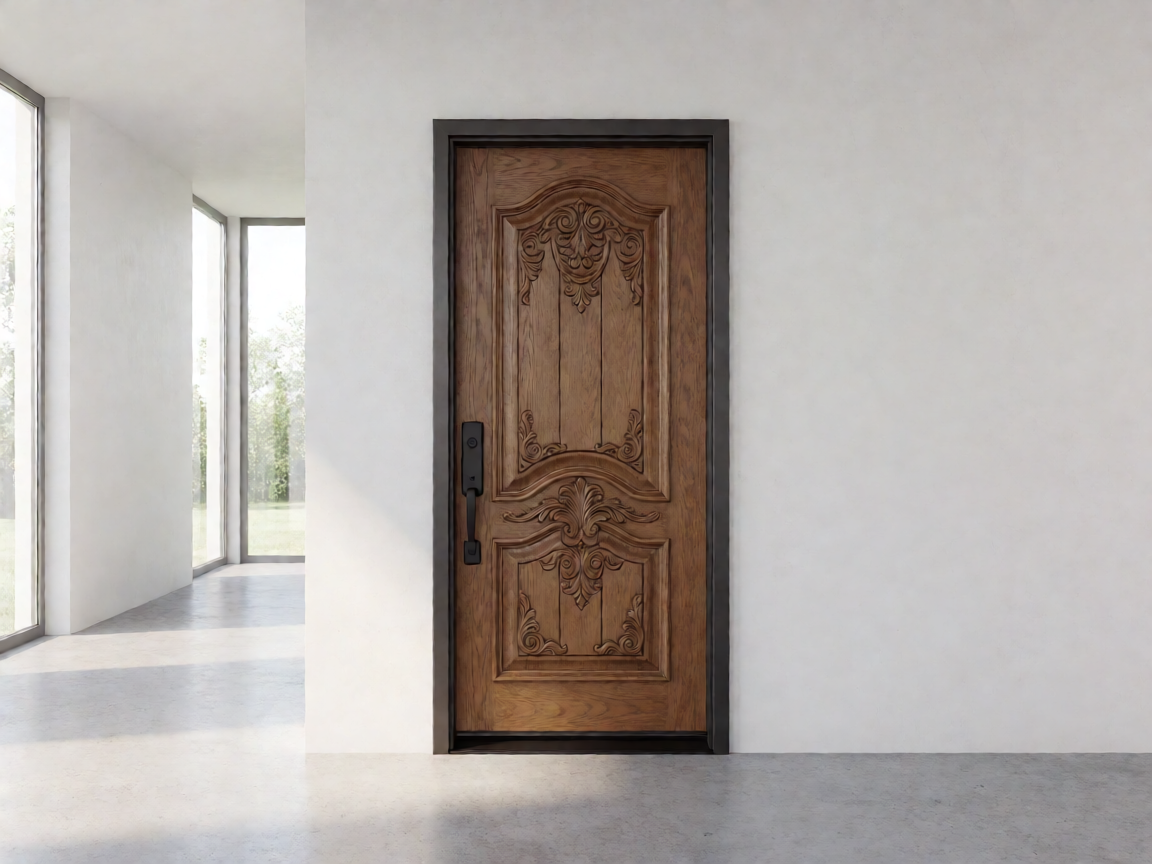
- Cast aluminum villa door panels: Molten aluminum is poured into a mold, producing deep relief patterns and thicker sections than extrusion allows. The casting process, pattern tooling, and finishing labor make these panels the most expensive decorative option, but they hold detail well and will not rust.
- Steel and wrought iron: Lower material cost, higher long-term cost. Without hot-dip galvanizing plus a multi-coat paint system, rust appears at welds and drainage points within a few seasons.
- Timber: Attractive and thermally stable, but it moves with humidity, needs refinishing every 2–3 years in exposed positions, and cannot match aluminum on dimensional accuracy for large spans.
Ask suppliers for the alloy designation and the measured wall thickness of the actual profile they intend to use, not the catalog average.
Structure and Specifications: Where the Money Actually Goes
Once the alloy is fixed, five specification variables drive the remaining cost. Vague answers here are the most common source of change orders.
| Specification | Typical Range | Effect on Cost and Performance |
|---|---|---|
| Frame profile wall thickness | 1.8–3.0 mm | Thicker walls resist wind load and sagging on wide openings; a step up from 2.0 mm to 2.5 mm is a measurable cost jump. |
| Panel or plate thickness | 1.5–3.0 mm sheet | Thin sheet dents under impact; thicker plate adds weight and requires heavier hinges. |
| Core filling | Aluminum honeycomb, PU foam, rock wool | Aluminum honeycomb filling gives high rigidity at low weight and resists deformation, but costs more than injected foam. |
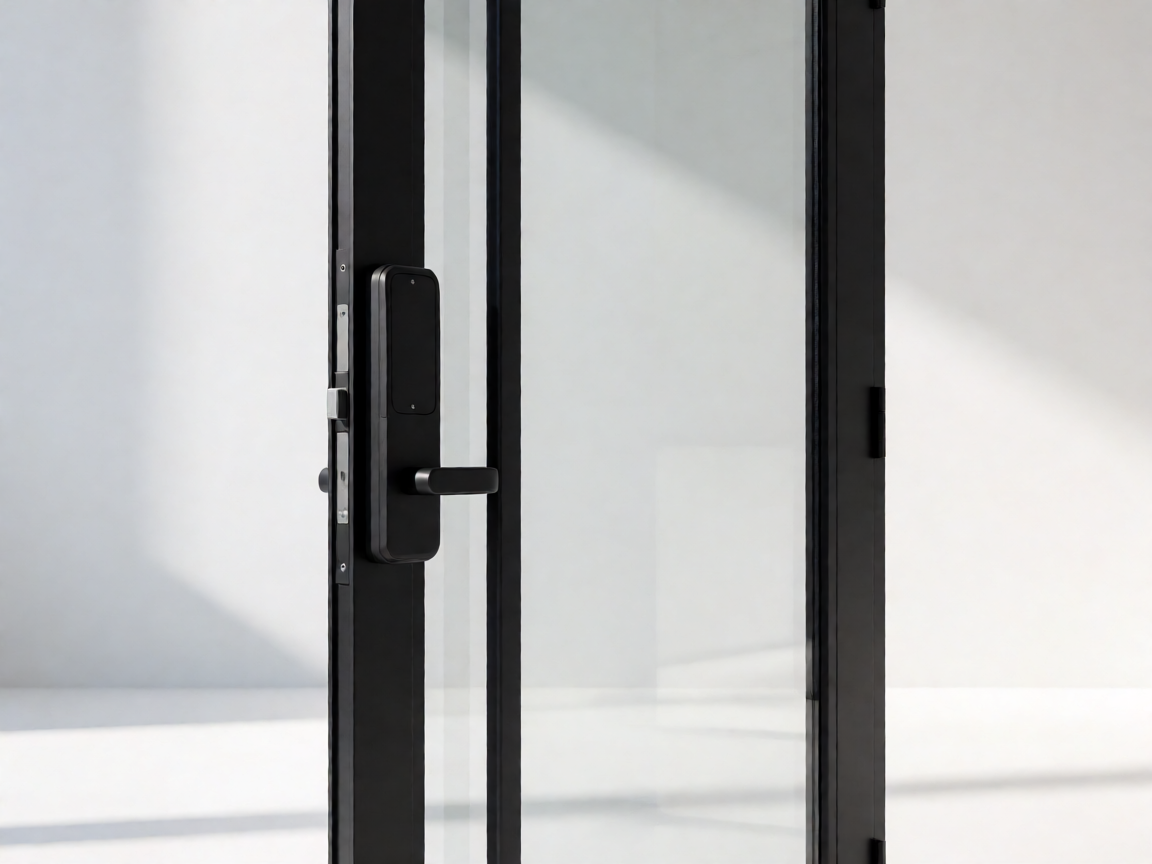
| Glazing | 5–12 mm tempered or laminated | A glass spliced exterior door design needs laminated or tempered panes, correct gaskets, and drainage channels; double glazing adds thermal performance and weight. |
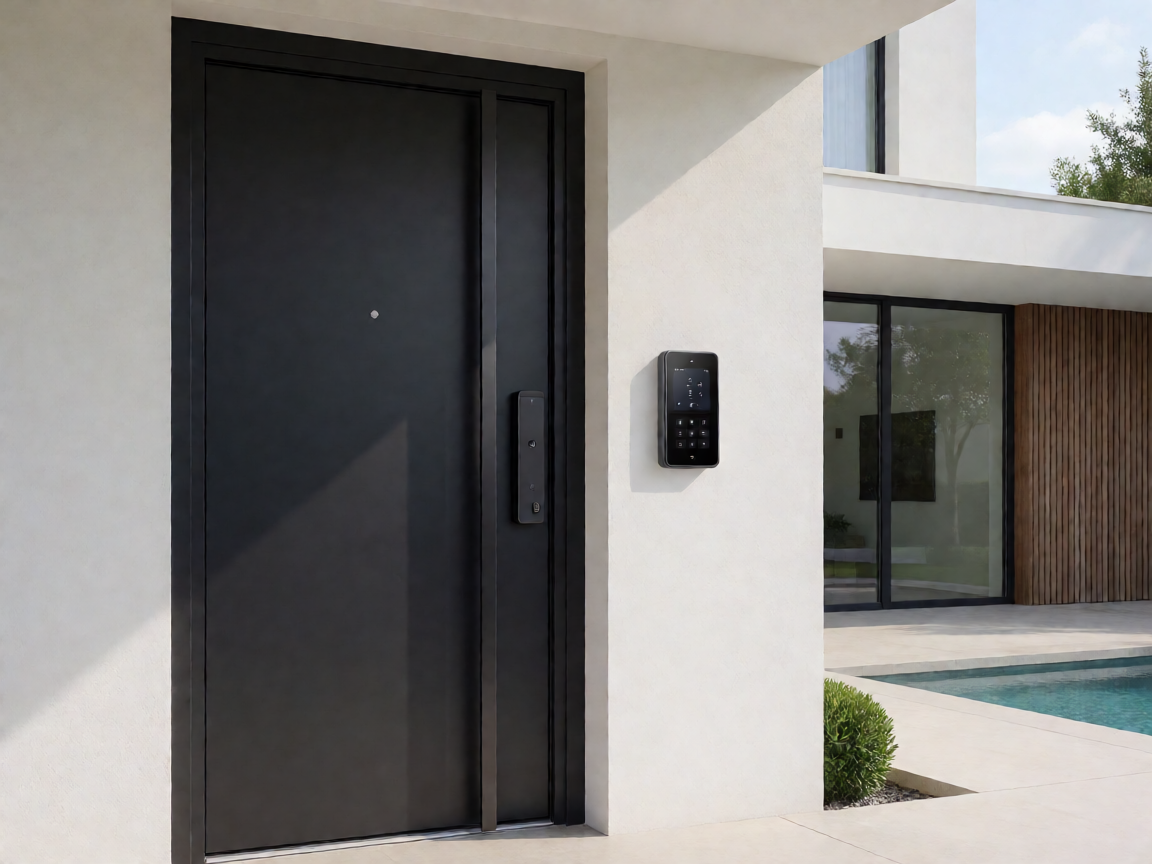
| Locking system | Multi-point mechanical to electronic | A smart fingerprint lock requires a reinforced lock box, concealed wiring, and a power route, all of which must be planned before fabrication. |
Specify the hinge type and the total door weight early. Hardware rated below the finished leaf weight is the most frequent cause of sagging within the first year.
Key Advantages for Villa Exterior Applications
Aluminum systems earn their place on villa exteriors for reasons that show up over years rather than weeks.
- Corrosion resistance: No rust on coastal or high-humidity sites, provided fixings and hinges are also stainless or aluminum.
- Low maintenance: A wash with mild detergent twice a year is normally sufficient; powder-coated surfaces do not need annual repainting.
- Structural span: Aluminum extrusions carry wide single-leaf gates and tall entries without the bracing ironwork needs.
- Dimensional accuracy: Profiles can be cut to millimetre tolerances, which matters when a courtyard opening is out of square.
- Integration: Channels for cabling, LED strips, and lock bodies can be designed into the profile rather than added on site.
Custom Options and How Each One Changes the Quote
Options are where budgets drift. Each of the following should be quoted as a separate line so you can compare suppliers fairly.
- Finish: Standard powder coating is the baseline. PVDF coating costs more but holds colour better under strong UV. Anodizing offers a metallic look with good abrasion resistance, while wood-grain sublimation adds a timber appearance without the upkeep.
- Colour: Standard RAL shades are usually included; custom matching to a facade sample adds a setup charge.
- Opening direction: Inward or outward, left or right hand, single or double leaf. Non-standard swings may require a different hinge set or a floor pivot.
- Smart fingerprint lock: Adds cost for the unit itself plus the reinforced lock box and wiring provision. Confirm the emergency power method and whether the lock integrates with your building management system.
- LED decoration: Low-voltage strips require a driver, a concealed cable path, and a weatherproof junction. Specify the IP rating for exterior use.
- Transom lintel: A fixed upper panel or glazed transom raises the total height and needs a heavier frame and anchor schedule.
Buying and Selection Tips Before You Place a Deposit
- Measure the structural opening at three points — top, middle, and bottom — and share the smallest figure with the manufacturer.
- Ask what is excluded: freight, crane offloading, installation labour, duty, and site welding are commonly left out of factory quotes.
- Request a physical finish sample, ideally one that has been through the actual coating line, not a printed colour chip.
- Confirm hardware brands for hinges, handles, closers, and the lock body, and check they are rated for the finished leaf weight.
- Ask for wind-load and water-tightness test reports if the door faces an exposed elevation.
- Clarify the warranty split: surface finish, structural frame, hardware, and electronic components often carry different terms.
- Agree on a production and shipping schedule in writing, and align it with your site readiness date.
Conclusion
A custom aluminum courtyard gate or cast aluminum villa door is priced by material grade, profile thickness, infill, glazing, locking, and finish — not by appearance alone. When a supplier can explain each of those variables in measurable terms, you have enough information to judge whether a quotation is competitive or simply cheap. Bring the same specification sheet to every vendor, ask the same questions about exclusions and warranties, and the comparison becomes straightforward rather than a matter of trust.