Access Control Doors: Warranty Coverage for Entry Systems
Specifying an entry system for a villa is rarely just a design decision. Owners and builders weigh security against street appeal, worry about rust and salt air on coastal plots, and want a door that stays low-maintenance for a decade or more. Then there is the practical side: non-standard openings, thick wall assemblies, and installation tolerances that never quite match the drawing. And once the door is on site, the question that matters most is often the one nobody asked at the quotation stage — what exactly does the warranty cover, and for how long? Access control doors combine a mechanical envelope with electronic hardware, and the two carry very different coverage terms. Understanding how material grade, structure, and customization affect that coverage helps you compare suppliers on equal terms.
Core Materials That Define Both Performance and Warranty
Warranty length is not a marketing number; it usually follows the material specification. A supplier can only offer a long structural guarantee when the frame and leaf are built from alloys and coatings that hold up in exterior conditions.
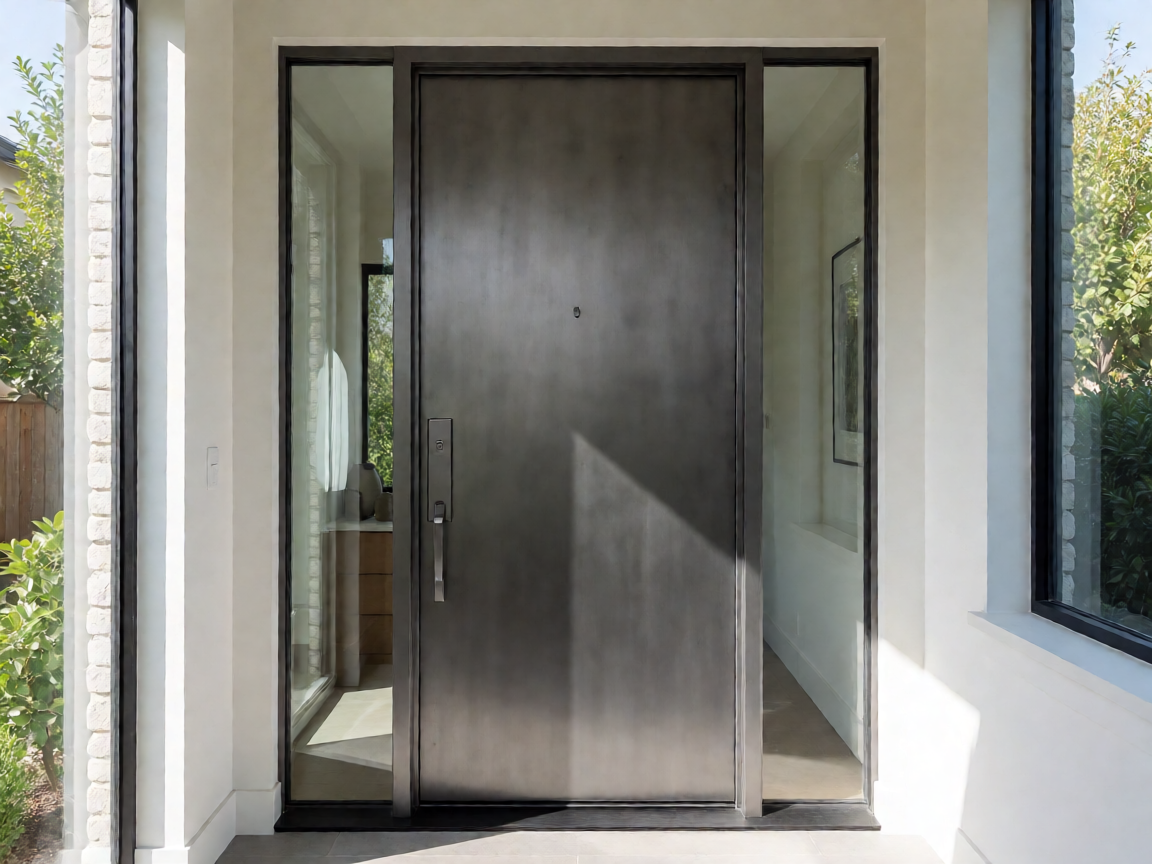
Most villa entry systems use extruded aluminum alloy frames, commonly 6063-T5 or equivalent, chosen for dimensional stability and corrosion resistance. On a cast aluminum villa door, the decorative panels are sand-cast or gravity-cast from aluminum and then machined, which allows deep relief patterns that would be impossible in a pressed steel skin. Cast panels resist denting and, importantly, do not rust — a key reason aluminum systems often carry longer corrosion coverage than galvanized steel alternatives.
Surface finish determines a large share of the warranty terms. Standard powder coating and anodized finishes behave differently from multi-coat fluorocarbon systems, and coastal projects usually require a more robust pretreatment and a thicker dry film. Stainless steel 304 or 316 hardware, sealed bearings in hinges, and a properly drained threshold all influence whether a claim is accepted years later.
Product Structure and Specification Explained
Specification sheets can look similar while describing very different products. These are the values worth comparing line by line, along with the coverage suppliers typically attach to each part.
| Component | Common Specification Range | What Warranty Normally Covers |
|---|---|---|
| Frame profile | 2.0–3.0 mm wall thickness, welded or mechanically jointed corners | Structural integrity, distortion, weld or joint failure |
| Door leaf plate | 1.5–2.0 mm structural sheet with 8–12 mm cast decorative panel | Delamination, panel separation, structural deformation |
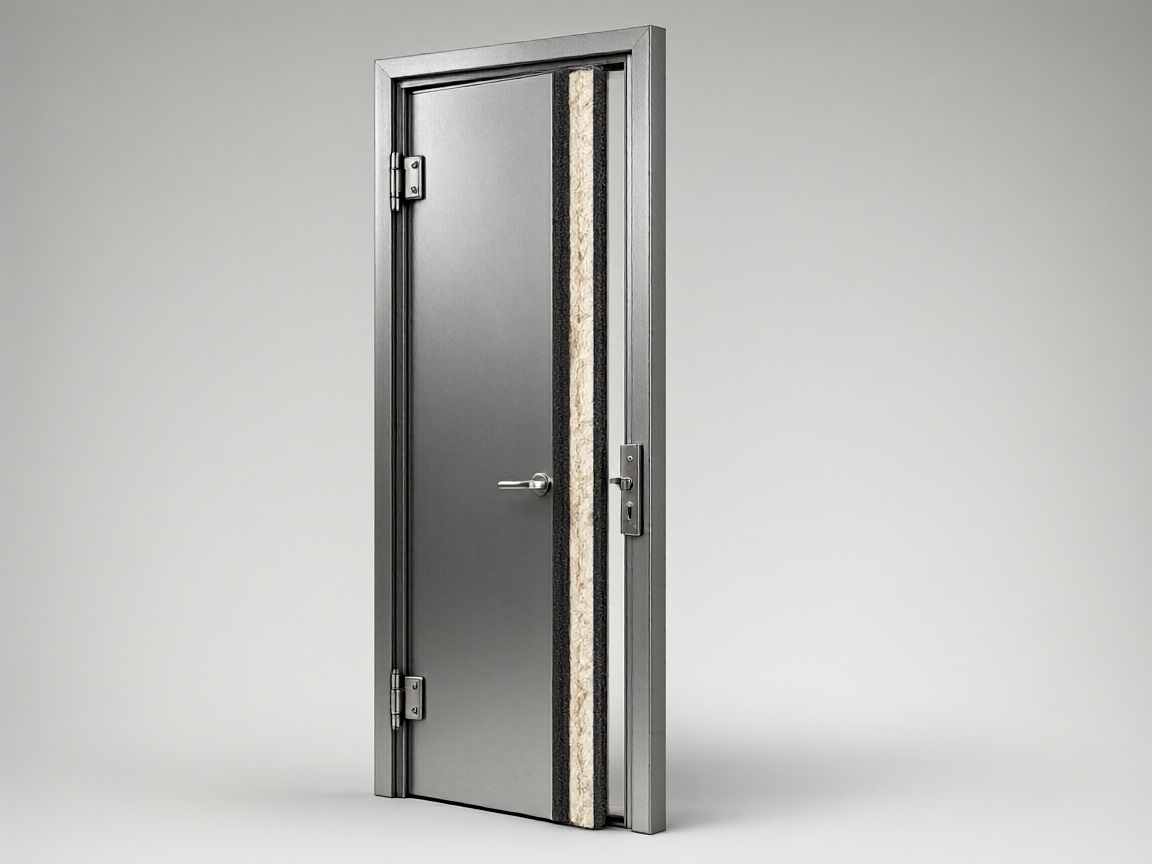
| Core filling | Aluminum honeycomb filling or composite insulation | Internal corrosion, sagging, loss of flatness |
| Glazing | Tempered or laminated safety glass, 6–10 mm | Seal failure and frame fit; breakage usually excluded |
| Lock system | Multi-point mechanical lock plus electronic module | Mechanical: 3–5 years. Electronics: often 1–2 years |
| Finish | Powder coat, anodized, or fluorocarbon | Peeling, blistering, excessive fading under stated conditions |
Two details deserve attention. First, aluminum honeycomb filling bonded to both skins gives a flat, rigid leaf with low weight — a construction that resists warping far better than foam-filled alternatives, which is why hinged systems using it tend to carry longer leaf warranties. Second, the lock system in an access control door is a hybrid: the mechanical multi-point mechanism and the electronic module are usually covered under separate terms, so ask for both in writing.
Key Advantages for Villa Exterior Applications
- Weather resistance: Aluminum does not rust, and with correct pretreatment and drainage, finishes hold color and adhesion through freeze-thaw cycles, humidity, and coastal salt.
- Integrated security: A rigid frame with multi-point locking and a reinforced strike plate provides forced-entry resistance that a decorative gate alone cannot deliver.
- Low maintenance: A periodic wash and an annual hinge and seal check is usually the full requirement — which also keeps the warranty valid.
- Comfort performance: Honeycomb-cored leaves with thermal breaks and laminated glazing reduce heat transfer, condensation, and external noise.
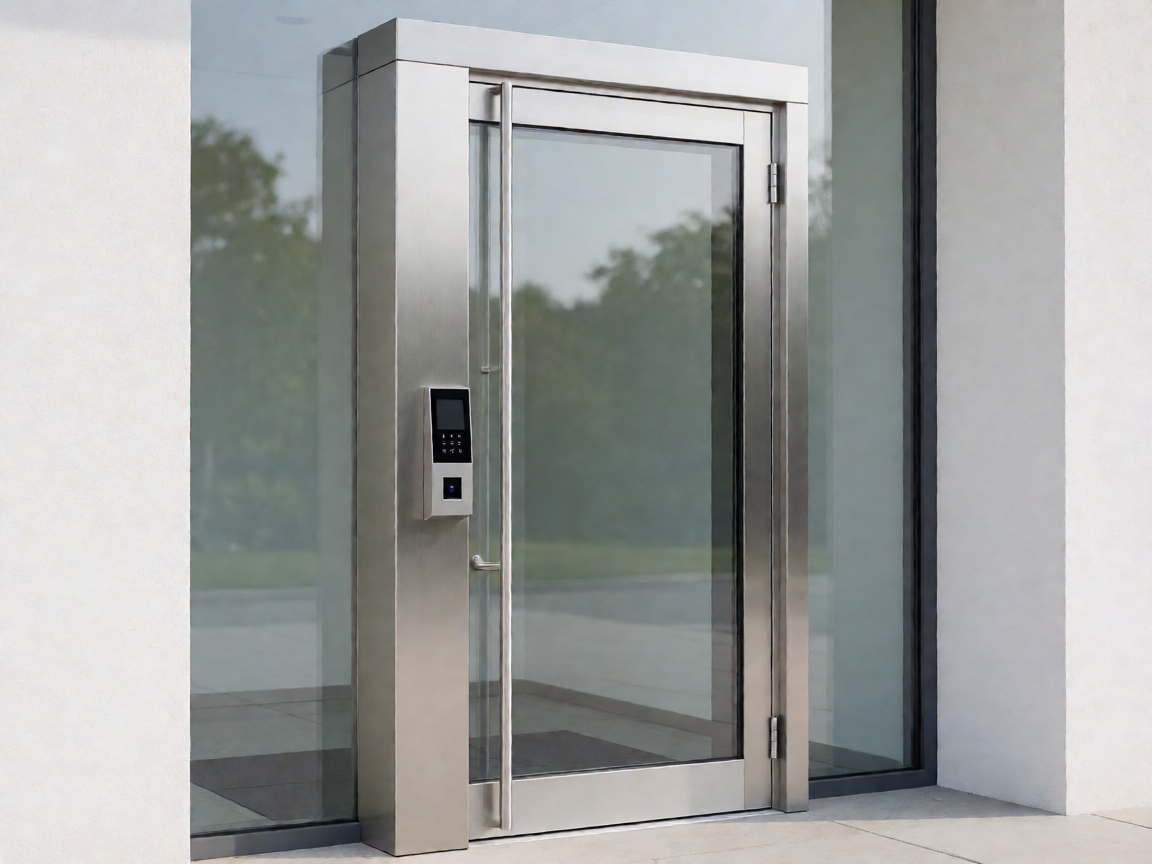
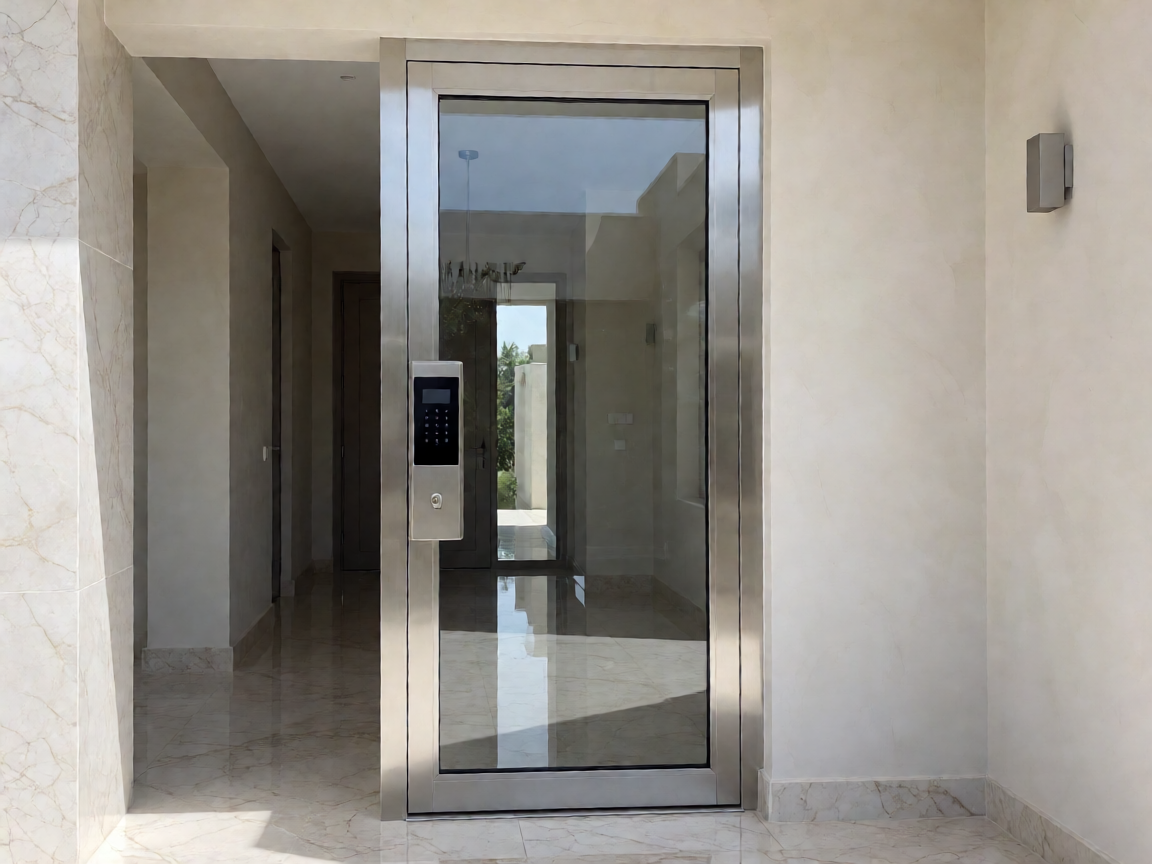
- Access control ready: Factory-prepared wiring channels and lock pockets mean keypads, readers, and a smart fingerprint lock can be fitted without cutting into a finished door on site.
Custom Options and How They Affect Coverage
Customization is where warranty terms are most often quietly narrowed. Factory-built options generally stay inside the standard guarantee; field modifications usually do not.
- Finish and color: RAL powder coat colors, anodized tones, wood-grain sublimation, and fluorocarbon systems for severe exposure. Non-standard colors may carry a shorter fade guarantee than the base finish.
- Opening direction: Left or right hand, in-swing or out-swing, single or double leaf — confirm handle and hinge placement before production, since reversing on site can affect sealing and coverage.
- Smart lock integration: Fingerprint, PIN, card, and app-based entry with mechanical override and battery backup. Ask about the electronic module warranty, firmware support period, and surge protection requirements.
- LED decoration: Integrated lighting in the frame or panel. Low-voltage components should be factory-sealed and driven by a matched power supply to remain covered.
- Transom lintel: Fixed glazed panels above the leaf improve daylight and proportions. Structural calculations and flashing details must be included, since leakage from an unflashed transom is commonly excluded from claims.
The same logic applies to a custom aluminum courtyard gate or a glass spliced exterior door matching the entry system: when the supplier fabricates, finishes, and pre-hangs the entire assembly, responsibility stays with one party instead of being split between a fabricator, a glazier, and an installer.
Buying and Selection Tips: What to Confirm Before You Sign
- Request the written warranty document, not a summary in a brochure, and check component-by-component durations.
- Confirm whether coverage is conditional on professional installation by an approved team, and get that in the contract.
- Ask how coastal, high-humidity, or heavy-snow projects are handled — some warranties require upgraded finishes or exclusion clauses.
- Clarify exclusions: glass breakage, damage from pressure washing, unauthorized modification, power surges, and neglected drainage are common.
- Check spare parts availability for hinges, seals, handles, and electronic modules over the expected service life.
- Confirm the maintenance schedule the warranty requires, and calendar it from day one.
- Verify that the electronic access control warranty includes technical support, not just replacement parts.
Conclusion
A warranty is only as strong as the specification behind it. When the frame thickness, leaf construction, filling, glazing, and finish are documented clearly, coverage terms become predictable rather than negotiable. For villa projects, the safest approach is to buy the complete entry system — leaf, frame, hardware, and access control — from a single manufacturer, install it as designed, and keep records of the maintenance it requires. That combination protects the investment far better than any single guarantee clause, and it keeps the door performing as intended long after the handover date.