Steel Security Doors: Lead Time Planning Before Ordering
Ordering steel security doors for a villa or a renovation project rarely goes wrong because of the door itself. It goes wrong on the calendar. A homeowner approves a design in March, the builder schedules landscaping for June, and then the doors arrive in July — too late for the frame-out inspection. The usual culprits are non-standard opening sizes, custom powder-coat colors, upgraded locking hardware, and freight to sites that are not near a port. Add concerns about rust in coastal air, maintenance cycles, and whether a heavy steel leaf will fit an existing masonry opening, and the buying decision becomes a scheduling problem as much as a specification problem. This guide explains what to plan, in what order, and how much time to allow before you sign a purchase order.
Core Material: What Decides Performance and Lead Time
Most exterior steel security doors use a cold-rolled steel substrate with a hot-dip galvanized coating, typically Z100 to Z275 (100–275 g/m² of zinc). The zinc layer is what resists rust at cut edges, welds and the bottom rail where water sits. For coastal sites or regions with heavy road salt, a 304 or 316 stainless steel skin is the more durable choice, but it is usually made to order rather than pulled from stock — a detail that adds weeks to the schedule.
Surface preparation matters as much as the steel. A properly built door goes through degreasing, phosphating and a chromate or nano-ceramic pretreatment before powder coating or PVDF is applied. Skipping the pretreatment is where low-cost doors fail: the coating blisters within two or three seasons. Ask suppliers for the coating system, dry film thickness in microns, and salt-spray test results rather than a general "rust-proof" claim. Standard colors on standard sizes are typically in stock; custom RAL colors, wood-grain transfer finishes and stainless substrates are batch-produced and should be planned accordingly.
Product Structure and Specifications
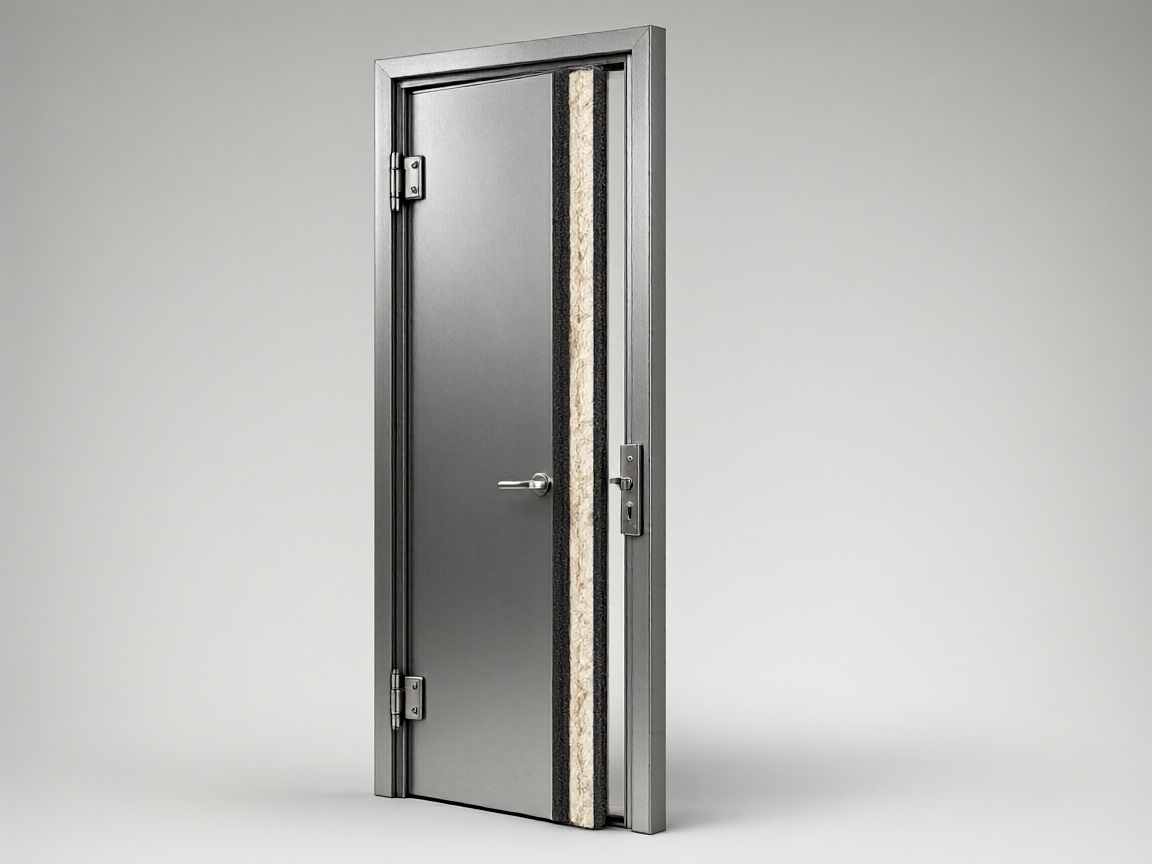
Specifications drive both performance and production time. The table below shows typical ranges for villa-grade steel security doors.
| Component | Typical villa specification | Effect on lead time |
|---|---|---|
| Frame thickness | 1.5–2.0 mm galvanized steel, welded or knock-down | Standard profiles are fast; deep or arched frames are fabricated to order |
| Leaf skin thickness | 0.8–1.2 mm steel, with internal stiffeners | Heavier skins may require reinforced hinges and longer fabrication |
| Filling | Rock wool, PU foam, or aluminum honeycomb filling | Fire-rated and acoustic cores often add 1–2 weeks |
| Glazing | Tempered or laminated glass, 6–8 mm, insulated units optional | Insulated glass units and decorative patterns are made to order |
| Lock system | Multi-point locking, euro cylinder, panic or electronic options | Electronic and panic hardware require door prep changes and testing |
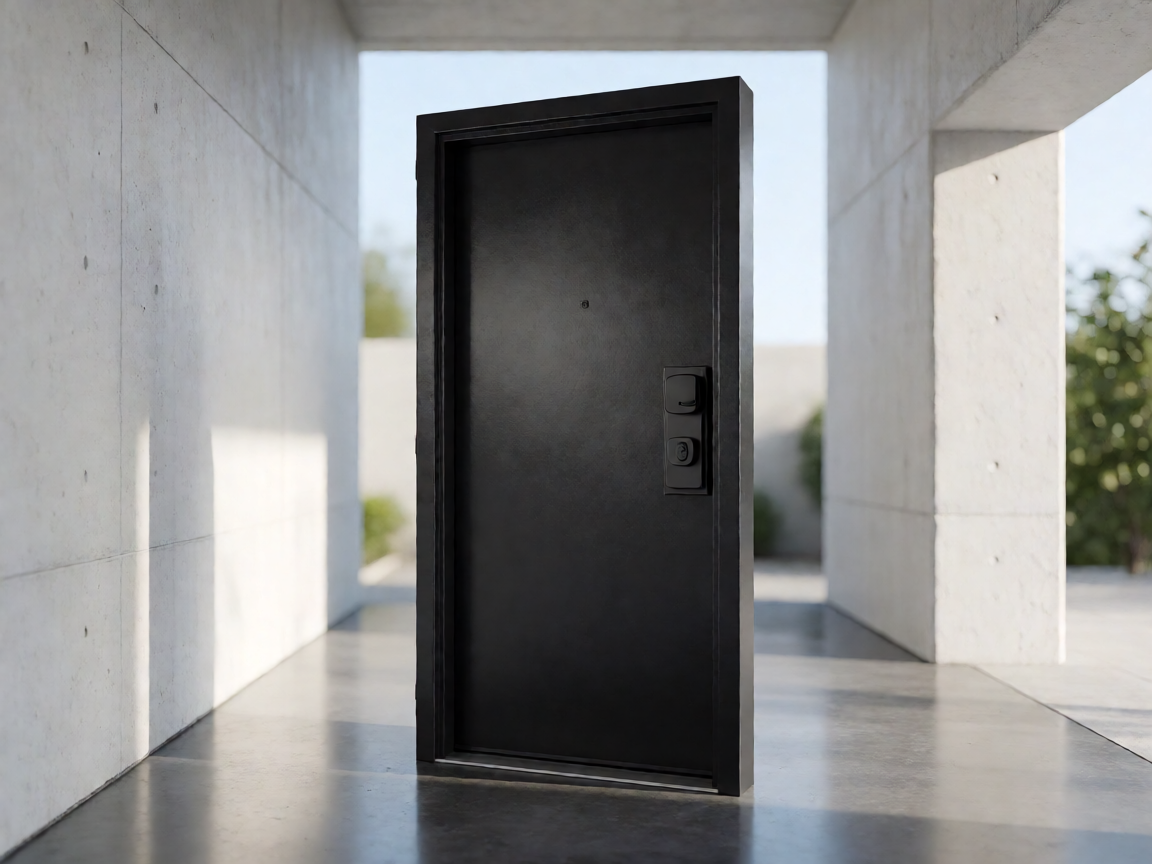
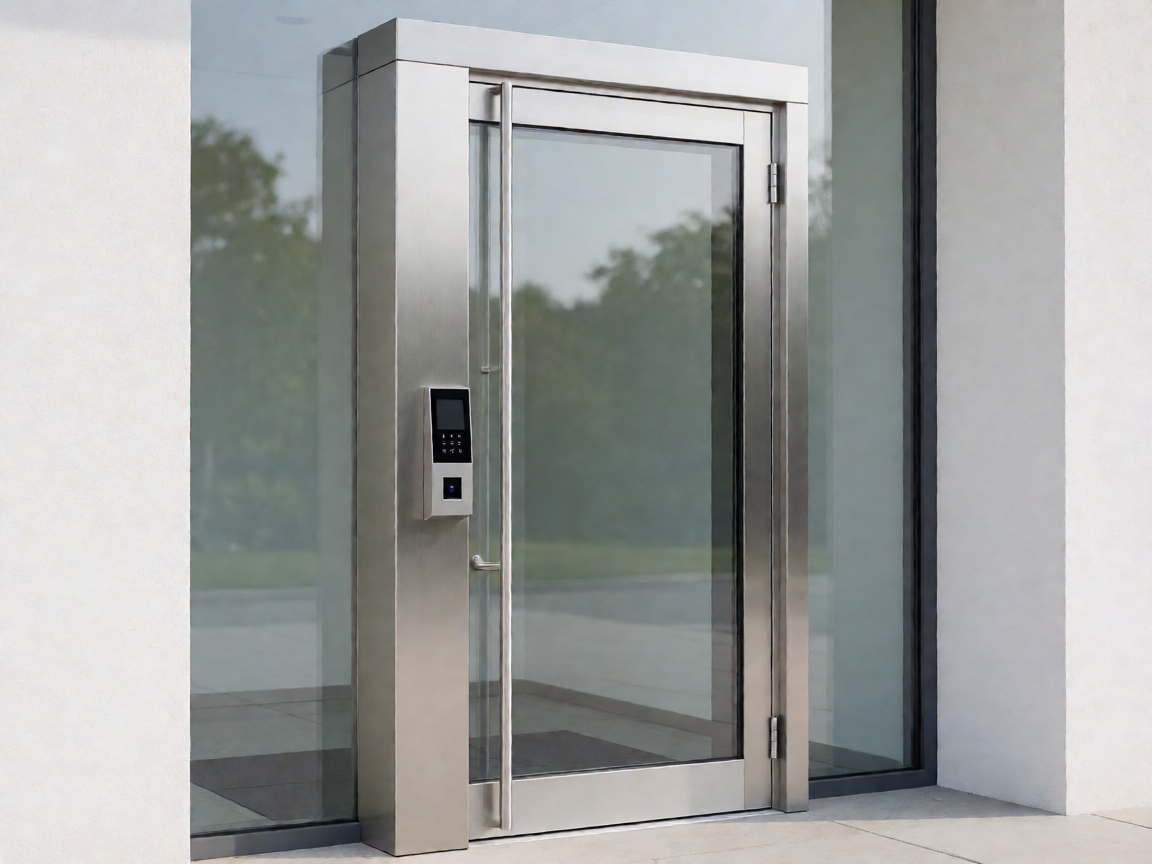
Filling choice deserves attention. Aluminum honeycomb filling gives a stiff, lightweight leaf with good flatness — useful on wide double leaves where weight stresses hinges. Rock wool adds fire resistance and acoustic mass but is heavier. Glazing changes everything: a glass spliced exterior door design — where a steel frame carries a large glazed panel — needs a different glazing bead, drainage path and structural calculation than a solid leaf, so treat it as a custom build, not an option box.
The lock system is the most common source of delay. A smart fingerprint lock needs a specific mortise pocket, cable routing through the leaf and hinge, and a power or battery strategy. If the door and lock come from different suppliers, confirm the prep drawing before production begins — retrofitting a lock into a finished steel leaf is expensive.
Key Advantages for Villa Exterior Applications
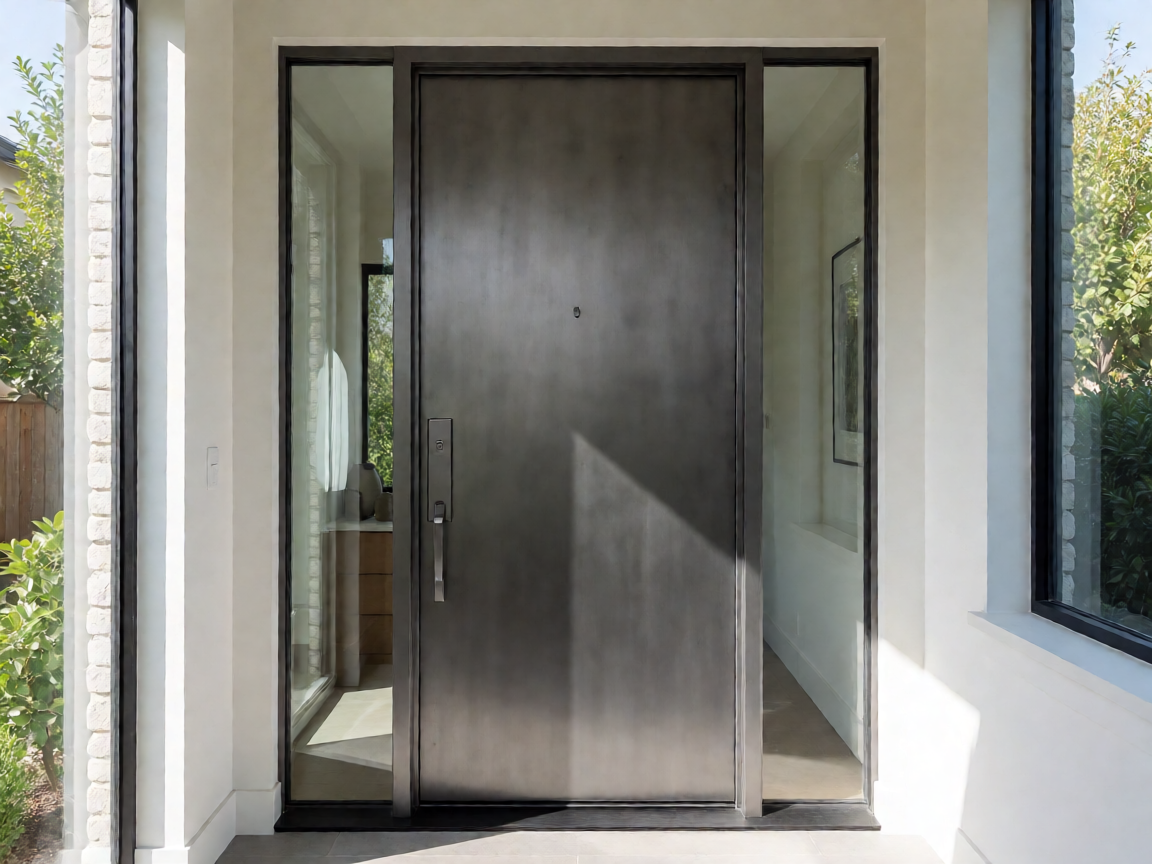
For villa entrances, steel security doors offer high strength-to-thickness ratios, resistance to forced entry, and dimensional stability in wide temperature swings. A well-coated galvanized door needs only occasional cleaning, which suits owners who are not on site year-round. Steel also takes paint and powder finishes accurately, so a main entrance door can be color-matched to a custom aluminum courtyard gate or a cast aluminum villa door elsewhere on the facade without visual mismatch.
Consider coordination early. Many projects pair a steel security leaf at the primary entrance with an aluminum or cast aluminum system at the driveway. Ordering these from one supplier, or at least sharing finish samples and RAL codes, avoids the situation where two "anthracite grey" elements arrive two shades apart.
Available Custom Options
- Finish: polyester powder coating, PVDF for high-UV or coastal exposure, wood-grain transfer.
- Color: full RAL range plus matched custom shades; always approve a physical sample.
- Opening direction: left or right hand, inward or outward, single or double leaf with unequal leaves.
- Hardware: multi-point locks, lever or pull handles, closers, and smart fingerprint lock integration.
- LED decoration: illuminated handles, house numbers and threshold lighting, which require low-voltage wiring planned at frame stage.
- Transom and lintel: fixed transom panels or a structural transom lintel to suit taller openings.
Every item on this list is a potential schedule risk. A standard door in a standard color may ship from stock; a door with LED wiring, a transom and a custom color is a made-to-order product.
Buying and Selection Tips: Plan the Lead Time Backwards
Start from the installation date and work backwards. A realistic schedule for a customized steel security door shipped internationally looks like this:
- Weeks 0–1: confirm opening sizes on site, wall construction and threshold details; issue the specification.
- Weeks 1–2: supplier returns shop drawings; you approve dimensions, handing, hardware and finish samples.
- Weeks 3–7: fabrication — cutting, welding, filling, coating and assembly. Custom glazing and electronics add time here.
- Week 8: quality inspection, hardware testing and crating.
- Weeks 9–12: ocean or road freight, customs clearance and site delivery.
Add a two-to-three-week buffer for port congestion, damage replacement or a missed approval. Practical selection advice: measure every opening rather than relying on architectural drawings, confirm the wall type (masonry, timber frame, steel stud) because fixing details differ, and settle the lock and finish decisions before fabrication starts. If the schedule is tight, standard sizes in stock finishes can be delivered in a fraction of the time — reserve custom work for the entrance that is actually seen.
Conclusion
Steel security doors are a long-life component, but they are ordered on a short clock. Choosing the right steel grade and coating protects against rust and maintenance costs; choosing the right structure, filling and hardware protects against performance problems. Planning the lead time protects the project. Confirm specifications, approve drawings and samples early, and build a realistic buffer into the programme — the door will then arrive when the opening is ready for it, not after the scaffolding has come down.